
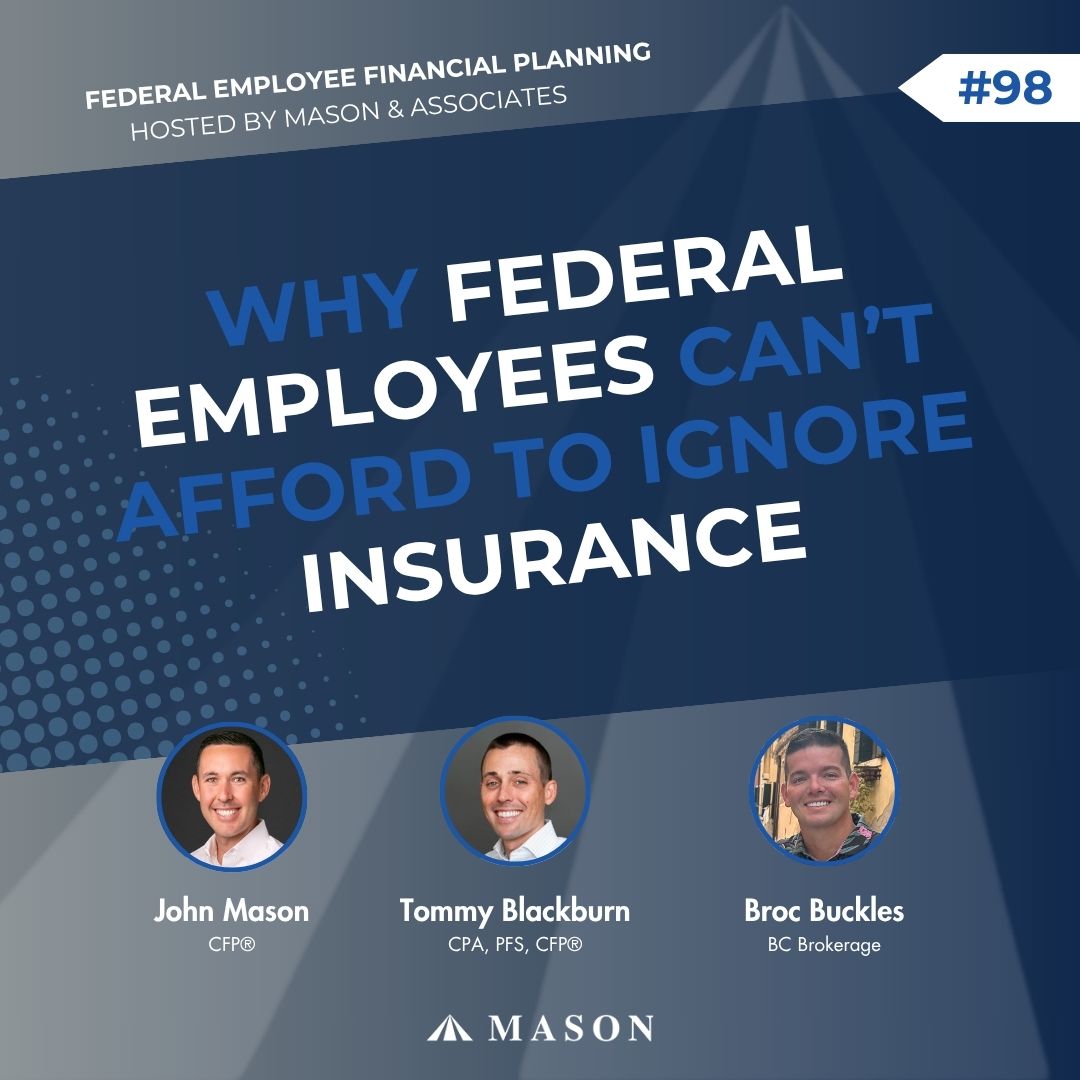
What if the biggest threat to your financial plan isn’t the stock market or taxes, but being underinsured? In this episode, Tommy and John sit down with Broc Buckles, co-founder of BC Brokerage, to talk about why insurance is a critical cornerstone of any financial strategy. Broc partners with fee-only financial advisors to find insurance solutions that genuinely fit their clients’ needs—without sales pressure or gimmicks—with the goal of making insurance make sense.
Listen in to learn why the right insurance coverage could save you thousands while giving you peace of mind. Broc also shares eye-opening insights on why premiums rise, how to avoid overpaying, and why working with a broker can uncover better coverage and rates than sticking with a single provider. From umbrella policies to navigating the stigma around insurance sales, this conversation will reshape how you think about protecting your future.
Listen to the full episode here:
What you will learn:
- The importance of insurance as part of a financial plan. (1:00)
- When and how Broc started his firm. (4:15)
- Why in-person meetings are not as important as you may think. (6:00)
- What carriers Broc’s company has. (11:00)
- Common mistakes to avoid when looking for the right insurance. (17:00)
- What an umbrella policy is. (20:00)
- The benefit of working with an insurance broker. (25:00)
- How much an insurance broker earns. (34:45)
- Why insurance brokers have a bad reputation. (40:00)
- What you need to know about long-term care. (50:00)
Ideas Worth Sharing:
- “Nothing can blow up a good financial plan faster than being uninsured or underinsured.” – Mason & Associates
- “It’s more than just looking at prices—you want to focus on value.” – Broc Buckles
- “If you can afford to retire, you can afford to die.” – Mason & Associates
Resources from this episode:
- Broc Buckles: LinkedIn
- BC Brokerage
- Mason & Associates: LinkedIn
- Tommy Blackburn: LinkedIn
- John Mason: LinkedIn
Did you enjoy the Federal Employee Financial Planning Podcast? Never miss an episode by subscribing on Apple Podcasts, Amazon, Spotify, and YouTube Music.
Read the Transcript Below:
Congratulations for taking ownership of your financial plan by tuning into the Federal Employee Financial Planning Podcast, hosted by Mason & Associates, financial advisors with over three decades of experience serving you.
John Mason: Welcome to the Federal Employee Financial Planning Podcast. Tommy and I are so excited to bring a special guest on this episode. Broc Buckles from BC Brokerage. He’s a co-founder of the firm and in charge of marketing, and this firm does really cool work. They work with fee-only financial planners like us to help our clients get the necessary life insurance they need and their financial plans.
As a fee-only financial planning firm, we can’t accept commissions or sell insurance products. Don’t confuse the previous statement that we think commissions are bad or that we think insurance is bad. In fact, commissions and insurance are necessary and one of the most important parts of your financial plan.
Nothing can blow up a good financial plan faster than being uninsured or underinsured. Although we don’t sell insurance products that Mason and associates, we align ourselves with companies like BC Brokerage, who we trust to help our clients. Insurance is a word most people don’t want to hear, or when they hear it, they have a bad connotation.
Everybody knows somebody that’s been taken advantage of or feels like they’ve been taken advantage of from an insurance salesperson. Broc Buckles and his team is the opposite of that, and that’s why we’re excited to have them on the Mason & Associates Federal Employee Financial Planning podcast.
Folks, remember, unlike many content creators, we’re financial planners first, and we do this second, and each episode we share real-life experiences from decades of helping federal employees. And always, we hope to help you understand the complexities of your benefits package and all areas of your financial plan.
Tommy, Broc, welcome to the Federal Employee Financial Planning Podcast.
Broc Buckles: Thanks, man. That might have been one of the best intros I’ve ever heard, John. So good on you, man. That was great.
John Mason: Well, thank you, sir. It’s one thing we’re trying to get better and better each time, right? It’s like if you don’t hook people at the beginning, they’re gonna tune you out before they listen to the meat of the podcast. So thank you.
Broc Buckles: Yeah, you bet. That was great
Tommy Blackburn: Broc. It’s great to have you here. And, yeah, on the intro, I am chuckling ’cause when we recorded the podcast with you, I think John and I walked away, like, “He did a pretty good job of that. We gotta step our game up a little bit.” So, friendly competition there.
Broc Buckles: There we go, man. I love it. Hey, we all push each other to get better, right?
John Mason: Yes, we do. Well, Broc, before we dive into the podcast, why don’t you do a little introduction for our audience, and keep in mind it’s a federal employee financial planning podcast. We’ve got folks listening from across the country, everything from active clients to people who will never meet.
So if you would just introduce yourself as well as share what you and your team do for firms like us. And we see you all the time at these financial planning conferences, so I think it’ll be good for our audience to hear what you guys do.
Broc Buckles: Yeah, absolutely. So again, Broc Buckles, Broc Buckles with BC Brokerage, which is a total mouthful.
I even have a hard time saying it sometimes, but basically, we started an insurance brokerage when we saw a need in the market for fee-only financial planners. They do great work, right? But one of the things that we noticed early on was a huge pain point of theirs was being able to find a trustworthy insurance broker to go to that wasn’t going to try to either one, steal their clients or two, upsell their clients a bunch of stuff that they didn’t need. And so we decided that we wanted to be that go-to solution. So we started here, kind of locally in Indiana, where I’m based, my business partners’ in Miami and then started growing.
And now we work with fee-only financial planners in all 50 states. And so it’s been a cool journey. On the personal side, married to my wife, Morgan, who’s awesome. And I’m a dog dad for a dog named Milo. So that’s a quick little blurp.
John Mason: Yeah. Broc, thank you for the introduction on everything that you guys are doing, and can you share with the audience when did you start the firm?
Broc Buckles: Yeah, so we started it in a very interesting time to start a business. It was in January of 2020, right before COVID. So yeah, we were starting and I was like, “Fantastic,” right? Like we knew we were gonna be virtual, but now we definitely knew we were gonna be completely virtual. And so part of me thinks that actually kind of helped us grow because everybody was online and willing to take meetings and, somewhat, I think just looking for social interaction outside of what was going on at home.
And so we started and just kind of got involved with our local FPA chapter. Started slowly, going to some conferences like XYPN. And so it was a really fun start, but we were just kind of figuring it out. So 2021, things started to pick up a lot, and then after that, it’s been a really fast growth.
John Mason: I didn’t know that we knew this, Tommy, coming into this podcast episode, but Mason and Associates in our current form, because we’ve been in existence, Broc, since like 2002 when Mike and Ken started the firm. And we were with a broker-dealer and we had the IAR designation and we would help do insurance products and whatnot.
But in September of 2020 is when we launched the fee-only RIA.
Broc Buckles: That’s awesome.
John Mason: So, we actually launched this version of Mason & Associates, similar timing to when you launched BC brokerage. And what’s kind of cool about that is we were actually going to launch in March or April of 2020, but then the whole world ended, delayed our game a little bit and we were able to come in the fall of that year.
So I definitely understand. We understand where you’re coming from. I mean, we were thinking that when our clients were going to leave. The broker-dealer and come with us that we would like load up the cars with paper applications and drive to people’s houses. But then the magic of DocuSign happened that year too, and we didn’t have to do any of that.
Broc Buckles: Yeah, for sure, man. It was definitely a period of evolution where you just had to learn to kind of go with the flow and that things weren’t gonna be the same as they always had been. So it’s, yeah, it’s really cool to see how a lot of firms evolved and businesses evolved, and I think there’s, you know, as bad as that time was and as much as everybody was ready to get out of it, I think there’s a lot of growth and learning and evolution that came from it. So for that, I’m thankful.
John Mason: Our big takeaway from that period was we were like 90% in-person client meetings before COVID, before 2020 and we’ve since flip-flopped to now we’re like 90% virtual. And that’s, we’ve had whole podcast episodes on why we do that and how we do that and why we continue doing that.
But the education experience is better. It allows us to meet with clients across the country. And we could go on this tangent for a while, but what I think the coolest thing to happen from COVID is people Google search “financial planner near me,” now they can search “federal employee financial planner.”
And it doesn’t matter how close they are to you in proximity or whether or not they’re right next door. ’cause you can just get the best of the best wherever they’re located, which kind of is like what you guys are doing at BC Brokerage is we don’t have to go to insurance Joe down the street in Newport News or Yorktown, we can go to you guys and people can use you throughout the country.
So I think it’s just brought a level of expertise and a level of enhanced client service that we didn’t have before COVID, in my opinion.
Broc Buckles: Yeah, 100%. I mean, you just had to learn how you were gonna do business. Like we, our goal was always be across the country, right? But when you say that out loud, that seems like a more daunting task than it really was.
Really, once we got licensed in a few states and kept doing it, it was just replicating it. So it’s a lot scarier in your head than sometimes it is to actually put into action. I think that’s a good lesson.
John Mason: Well, I can tell you one of my favorite things, and I did more of the insurance stuff, Tommy, than you did over the years, but one of my favorite things about being a fee only RIA and not having to do, sell any insurance or market any insurance, is not having to worry about which carrier I’m appointed with or which carrier I’m not appointed with, or which state I need to have an insurance license designation in, or which ones I don’t.
Or if it’s a term, that’s one sort of appointment. But if you were to do an annuity, that’s another, and it’s just managing the, I don’t know if that appointment process is still the same as it was five or six years ago, but you know, back in the day we had like handwritten spreadsheets and like pins across the country on like where we’re licensed, I mean, it was brutal.
Broc Buckles: Yeah, for sure. I mean, I’ll tell you one thing, man, you better just be glad that you never got into the property and casualty side of things, the home and auto and all of that, because that makes the life insurance side look like a piece of cake with the appointments and stuff. So, yeah.
Tommy Blackburn: So I’m curious about that. So does, I know I’ve actually asked you a peer, a property and casualty, sorry, I was about to go to acronyms, but a property and casualty question before. You guys serve in that role as well?
Broc Buckles: Yeah, so we’re doing that in all 50 states now. So, depending on the state that you’re in, obviously, we might have more or less carriers, right?
Like if you’re in California, and a place that’s got a high risk for a natural disaster or wildfire area or something like that, or you’re in Florida where you’re hurricane prone in an area, it can be a lot more difficult. But in most states, we’ve got a lot of really good options, which has been a cool add-on.
John Mason: Can you elaborate a little bit more on that? Because a lot of the people who are listening to this podcast, Broc, are probably military veterans or served in the military or have some pathway to USAA and USAA is a fan favorite, but in our experience, the premiums have gone up quite a bit over time.
People love USAA because they believe that they always pay and they don’t give you the runaround as it comes to the claim process. I personally never had an issue with an insurance company paying, whether it’s long-term care, DI, Life or PNC, Property and Casualty, or even automotive.
So if you could just share a little bit on what carriers you guys are typically offering, either in your home state or Virginia, how do you stack up against somebody like USAA and maybe why somebody should get out of their comfort zone and maybe ask you guys to shop this for them?
Broc Buckles: Yeah, absolutely. So we’ve got a lot of Safeco, Allstate, a lot of the main carriers that you’re gonna be thinking about. But as a general rule of thumb, you should never just rely on one because what we find is there’s kind of this sneaky little trick or trick and what a lot of people don’t know is your premiums going up is usually a result of the loss that the insurance company took the year before, right?
That they’re trying to make up the money from. And so, “Oh, you know, it went up 30 bucks a month this year, and then that happened next year, and then that happened…” So now you’re paying $1,200 more a year or whatever it is, and you’re just thinking, “Well, this is happening across the board.” Right? But you’re not necessarily thinking, maybe I should go get this checked out.
And oftentimes what we see is that can result in literally people saving thousands of dollars of companies that are willing to accept more risk in that market. And so it’s just a really good idea to work with a broker and shop things out and look at more than one option because one person or one company is never going to be the answer.
You definitely want the entire picture and someone that’s gonna send that out to 4, 5, 6, 10 different companies and see if there’s a better rate out there that you can get.
John Mason: Can you tell us a little bit more, and Tommy, I don’t know how you feel about this, but at least me, personally, I use a firm over in Virginia Beach that kind of similar, Broc, to what you guys are doing at BC is that they’ve got Safeco and travelers at one point, I don’t know if they’re still using them or not.
Broc Buckles: Yep.
John Mason: Even for me, it’s kind of hard to get out of my comfort zone and go back to this firm and say, “Can you rerun these policies for me? Can you re shop it for me?” You have to reset up auto pay, you have to do all the things again, and then you have to fact-check the insurance company or the brokerage house to make sure you’re still getting all the things you wanted.
But to me it feels like every two or three years you’re probably needing to shop this coverage in a minimum if you want to always have a competitive premium. So I’m curious, your thoughts on that. I’m also curious, like your service level as it relates to property and casualty compared to Joe at State Farm, who’s down the street from us.
Is it gonna be better, the worse, the same? Talk about that a little bit.
Broc Buckles: Good question. So number one, it’s gonna be better than Joe, ’cause if Joe’s a State Farm rep, he’s only gonna try to sell you State Farm. So for anybody that’s listening along, that’s a good term to know is captive versus broker.
So when we say captive, that would mean like people that work at State Farm, and maybe they get you a competitive price, but they are selling solely State Farm, right? So if your rates go up or something like that, they might be able to get the price down, but that might come at the consequences of lowering limits or getting creative around how they’re designing those policies, which might mean if you have a claim, it’s not gonna be great for you, right? The other thing is I would say yeah, check it at least every two years, but if you have a good broker, and the way that we do it is we actually have a, a system called EZLynx where it’s a P&C rater, property and casualty rater or quoting software that proactively is always going to be checking on the best prices for you.
So once your information is in there, it actually is going to be doing that on its own, which is great. Technology’s wonderful. And so we’re actually able to reach out on a yearly basis when that renewal’s coming up to let the client know if there’s gonna be a better option out there. And so if they’re getting a letter in the mail saying that your premium’s going up by 30%, where you can say, “Don’t worry, we’re already thinking about it. We got you covered.” And help them get a better rate there.
John Mason: That’s not a service that I’m getting, I can tell you that.
Tommy Blackburn: Yeah. I definitely like the technology aspect of it. We’re big fans of technology and I have kind of picked up on that from interacting with your firm, Broc, that you guys are certainly utilizing technology to make it more efficient.
I’m curious, do you, you probably use some judgment, if I had to guess, right? So EZLynx says, “Hey, it’s going up.” And do you then say like, “Well, the other companies have these trade-offs,” and like John said, our clients now gotta go through setting up all these auto pays, again, where it’s just not worth the hassle.
But, “Hey, client, maybe like this is on our radar and if it gets worse, we’ve got some other solutions.”
Broc Buckles: Yeah, absolutely, man. I mean, and it kind of comes and goes right under different leadership, different companies are sometimes there servicing departments are better and then a new CEO comes in, they cut costs or something and then you’re waiting on hold for 30 minutes instead of getting right to somebody when you need to call them and change something.
So, personally, if I’m paying $15 or $20 more per month to be able to get somebody on the phone when I need it, that’s something that’s a trade-off I’m willing to take all day long. So I think it’s more than just looking at price. I think that when we talk to people about insurance, we wanna focus on value.
And value is not directly correlated with price. Price is obviously a point or a part of that, but we want to make sure that all around that client is getting the best experience possible. Because when we deal with our own insurance, that’s what we want to have as well.
Tommy Blackburn: So I didn’t think we’d spend so much time talking about property and casualty and maybe we’ll switch back, but this is certainly part of the financial planning picture.
And it’s great to have a resource that can connect all of these pieces with us and our clients. What do you see, broad stroke, and I’m sorry if it’s very vague, like as big misses or like, or common mistakes in that world specifically. I know one that comes to my mind. It would be like an umbrella policy.
I know we constantly are trying to get clients to look at those, but anything else? My mind’s like thinking flood. Just the different riders, yeah. Any common mistakes you see besides not shopping frequently enough?
Broc Buckles: Yeah, so if we go down the home and auto train or the home train, we’ll never gonna move on to anything else.
So I’ll keep it simple and we’ll do auto, but it goes for home too, right? And umbrella is a good point there, Tommy, but what I would say is just like, the limits are terrible, right? So someone comes to me with like, state minimum, right? They’re like 50 and a hundred, meaning that like if you were to get in an accident, anything over a hundred grand, you become personally responsible for it because that’s all they’re gonna do.
So if you’re like driving your way through work, you get distracted for a second, or you’re, you’re helping your kid in the backseat or whatever you’re accidentally doing, and you rear into somebody and they’re driving a really expensive sports car, right?
And it’s gonna cost more than a hundred thousand dollars to fix. Now you become personally liable for that damage, right? God forbid you rear-end them, they get neck pains or something happens, they have to go get surgery, now you’re responsible for their medical bills, right? So one of the worst things that you can do, and one of the easiest things to mitigate for a really inexpensive amount of money, is just get the proper limits.
And with most companies across the country, it’s gonna be 250, $500,000 limits, and then get a, at least a million dollar umbrella policy on top of that. And you’ve really done a good job of insulating yourself so that you’re not gonna have to worry about some of those minute details of, “Oh crap, I got a fender bender. What am I gonna have to pay for this now?”
Tommy Blackburn: That is great, Broc. I’m curious, you mentioned the, that all sounds great, the umbrella, $1 million minimum. I think we certainly get on board with that. Where my mind is wondering is is there a point where, like, how much umbrella coverage can we get? Or at what point does this become more of like a customized quote where we gotta kinda get more creative?
Broc Buckles: Yeah. So most companies up to $5 million, they’re just gonna be like, “Yeah, sure. We’ll ride it.” As long as you’ve got the things that you need to back it, right? And you’re willing to pay the premium.
Once you get beyond that, sometimes we have to do stacking umbrella policies on top of each other, right? So maybe you’ve bundled one, you’ve got your home on your auto with a carrier, and then we’ll do another policy with a different company that would be called a mono line policy or standalone umbrella policy, which basically after you have gone through your umbrella, all your limits for your a home and auto, and then your umbrella through the company that you currently have, you’re able to tap into that next umbrella, right?
So if you need a $10 million policy, we can likely get it for you. It just might be through more than one carrier.
Tommy Blackburn: And while, John, I know we wanna move off of this, and I swear we will. It just dawned on me, we keep saying umbrella, umbrella, umbrella. Perhaps everybody doesn’t know what an umbrella policy is and we should explain. So, Broc, this is your world. I imagine you can give a very succinct explanation of it.
Broc Buckles: I can make it quick, Tommy. So all it is an additional layer of liability coverage. So that means it has, it’s not gonna take care of you, right? If you were in an accident or something were to happen, or you go beyond what your car costs, it’s not for you.
Right? But what it is for is if you injure someone, someone sues you, anything where people could kind of threaten your financial livelihood by trying to get in your pockets, it’s an extension that doesn’t allow that to happen. So think of it as a liability policy that’s only for other people. That’s as quickly as I can do it.
John Mason: And do we call it like a secondary insurance, right? Or a co-insurance that kicks in after you’ve blown through the first limits, right?
Broc Buckles: You got it.
John Mason: And you mentioned the limits a little bit. You know the 250 or 500. I wrote down Pennywise pound foolish, where a lot of times we can over-engineer or go into analysis paralysis and think like, “Well, I want the cheapest insurance.” But just like we said in the introduction is one of the quickest ways to blow up your financial plan is not signing up for health insurance for two years, rolling the dice and you have a heart attack or signing up for the bare minimum state limits and then you rear end somebody because you’re texting and these things blow up a financial plan very quick.
A premature death with no life insurance, all because we’re trying to save $10, $50, a hundred dollars a month. So in order to have, I believe, that umbrella policy, most insurance companies will require that you have certain limits in place, too, right?
Broc Buckles: Yep. And usually that’s that 250, 500.
John Mason: And then in my experience, if you’re gonna add the umbrella, you’re typically doing your home, your auto, and the umbrella with the same company, right?
Broc Buckles: Yep. Yep. But it doesn’t have to be. There are standalone options. So like if your company will not do it, there are options out there, but typically it’s more common to bundle them.
John Mason: And I guess it’s good for our audience to know too, like for any of you that have toys, by toys I mean motorcycles, RVs, boats, jet skis, trampolines, pools, rottweilers. I know that’s not a toy, but you know, the more risky things that you have, this does impact your premiums both for home and auto as well as umbrella. Correct?
Broc Buckles: Yeah, absolutely. You named a lot of the really good ones, John. I would also say if you’re going to have somebody that’s gonna be a teenage driver anytime soon, go get it now, ’cause once they have their permit, a lot of companies will be like, “Yeah, we’ll give it to you in like a year or two.”
Not while they’re like permit drivers or, so that’s an important thing to know too.
John Mason: I love what you said about the value, right? We talk about insurance as a necessary thing. We talk about it, we know we have premiums. Nobody likes paying for things that they hope they never use.
You mentioned the value that you add by like constantly reviewing these policies for home and auto every year through the technology. As we kind of move into the other areas of insurance, which include life insurance, disability, long-term care, can you share with us how does BC Brokerage, how do you all serve clients in an ongoing basis?
Because a lot of your referrals are coming from people like us, where we’re doing the strategic planning meetings, we’re reviewing with clients every year, hopefully, their insurance needs. Maybe we do that better or worse than other firms, probably better we would think.
But how do you fit into that world and what should clients expect from you? Annual policy reviews, beneficiary updates, if they need to change a beneficiary, like how do you guys get involved in all of those things?
Broc Buckles: Yeah, absolutely. So we have a system where I cannot take very much credit for. My business partner, Peter, is way better at that stuff. I always kind of joke and say, “If you had two Broc Buckles at our business, you would meet a ton of people and then maybe not everything gets done the way it should.” So I’m thankful for Peter. But what we do is, we keep everybody up to date on what’s upcoming and then answer any ongoing questions.
So, 30 days before your policy’s supposed to renew, before you’re gonna get billed for it, you’re gonna get an automated email update letting you know, “Hey, here’s what you have coming up. Just a reminder, here’s the type of insurance that you have. Here’s how much you’re paying for it every year. Here’s how many years you have remaining.”
And then obviously there’s ongoing service items, right? So unfortunately, there people do get divorces or spouses pass away, beneficiaries do need to be updated. And so we help them take care of all of that. And the good news is, again, John, through COVID, it’s never been easier.
A lot of times, they can just log in and quickly change that stuff, where you used to have to print it out and sign it. But from an ongoing basis, the life in DI those are really policies other than increasing, like a DI policy limit down the road where you kind of set it and then as long as everything’s running the way that it should be, you are supposed to just be able to kind of forget it, keep paying it, and review it when you need to. But it’s one of those things where you’re probably gonna have it for a longer period of time.
John Mason: So when we were still doing insurance, kind of like towards the end of 2019 and into 2020, a lot of, and we didn’t have a great way to do this because we weren’t fully digital at that point, Tommy, we still had a lot of paper files, but insurance companies started issuing electronic policies, right?
So you would sign up for a 30 year term through Lincoln, you would get that, and instead of getting a physical policy in the mail, they were now sending you an electronic policy and then relying on the client to save that on their iPad or wherever, and probably like calling it out, probably a substandard filing system, right?
Most people aren’t that organized. How are policies being issued now? Do you guys store them? Is that burden all on the client? I just am kind of curious how all this is working now.
Broc Buckles: Yeah, that’s a great system. So we set up what we like to say is like a foolproof system, right? So we’ve got, we have a copy of the policy.
We have reminders in our own system, so we don’t rely solely on the insurance carrier system, and the advisors have a copy of the policy. So when there’s a policy coming up for renewal or a payment needs to be paid, we’re in the loop, the client’s in the loop, the advisor’s in the loop. And then most of the time the insurance carrier is also sending reminders via mail, snail mail, right?
And then they’re gonna get email reminders. And then in terms of storing the policies, it depends on the carrier. And a lot of the times, the clients actually have the choice if they want to have a paper copy, if they wanna have an electronic copy, or if they want to have both. So, we’ve tried to set it up to where if you miss a premium payment or you’ve got 30 days until this policy lapses or cancels because you didn’t pay it, it will not be because we did not try to almost beat your door down, reminding you to pay that premium.
Because the last thing that we ever want is for someone not to be able to get a policy back or a policy to lapse that they really need for their families.
John Mason: All good stuff. We’re next. Tommy, where do you think we should go next?
Tommy Blackburn: Well, the service model got me thinking, really the question of like, why did you decide to do this?
And maybe as we talk about that, one of the things somewhat backpedaling but looping it in as well was fiduciary and versus an agent. And maybe just explain, ’cause I thought it was great and you said, “Hey, audience, you should know the difference between independent and captive.” Meaning that I can shop everything but still kind of explain what is an agent as well as why did you and Peter decide to do this?
Broc Buckles: Yeah. Right. So an agent, I mean, agent, broker, agent usually used for, as a term for somebody that has their insurance license, right? Insurance agent, right? So that’s a general one or a captive agent would be somebody that works at a, solely at a company. And the way that I always kind of explain that is they’re coming to you trying to sell you on why one company is the answer for all of your problems, right?
So, there’s a lot of companies, maybe you’ve talked to somebody that called you and set up a meeting and only wanted to talk to you about one company, if you’re listening, and then a broker, they’re kind of showing you all these different reasons as to, “Here’s your options. Here’s kind of the good thing about going this way. Here’s maybe the benefit of doing this, a little bit differently.” And so I just think it’s better to work with a broker. There are still some brokers absolutely that are gonna try to pitch you products that maybe you don’t need. So you always be careful. And I always say just kind of have like your common sense meter on and if it feels too salesy or you don’t feel like there’s a good justification as to why someone’s recommending what they are, go back to Tommy and John and ask them what’s going on there ’cause they’ll have the right answer for you.
But in terms of why we got into what we did and why we wanted to work with people like you guys, I started my career at a captive company straight outta college, where it was there was one solution that fit everybody’s needs and it was like, get out there, go sell it. And sometimes I’d come back with a term policy ’cause I thought it made sense for the client term life insurance policy. And the question that I would get would be like, “Well, why didn’t you sell them a permanent policy? You’re gonna make a lot more commission off that.”
Right? And I was like, “Huh.” And then like after the kind of newness of it wore off, I was like, “I don’t really feel like I’m doing the right thing here.” Like, I don’t really go home after I get off of work and feel like I’m fulfilled by what I’m doing, right? And furthermore, it feels like I’m being pushed to do something I actually don’t believe in.
And so I was going to leave, my whole family’s in the medical field, so I thought maybe I’ll go get into some sort of medical device stuff or pharmaceutical. And my business partner said, “Well, hey man, I think there’s a cool market that we could serve.” And he told me about the fee-only financial planning community.
And I was like, “Wait, so you mean that like they could do all the financial planning. They do a good job. Their recommendations are gonna be in the best interest of the client because they’re not compensated for it, and all we have to do is do a good job of working with them and implementing these things?”
And he was like, “Yeah.” I was like, “Well, that sounds like a win.” And so we kind of came up early on with the analogy, it’s like the financial planners, the doctor of the financial plan, right? If they see a prescription that needs to be written, they write the insurance prescription and then BC Brokerage fills it as long as everything looks good.
And so that’s why we love doing what we’re doing now. And it’s so cool to work with so many advisors that truly believe in helping their clients. And we like to be a small part of helping out there.
Tommy Blackburn: I love it. And that’s, what a great analogy. We probably gotta spend some time drilling into term even.
It’s probably one of the most boring, but also critical, life insurances out there. And John, and I kind of always wonder, tongue in cheek where, what do you get out of a term policy? And perhaps it’s the more comprehensive service and filling in other areas of need, but is there any money in selling a term policy?
Broc Buckles: Good question. So let’s start with what is a term policy. So the easiest way to say, think about it, is it’s a life insurance policy that you have for a set term. So a period of years, right? So 10, 15, 20, 25, 30 are gonna be the most common types. Well, there are some other companies where they go up over time, but let’s keep it simple.
15, 20, right? And then you have a certain amount. So say that you have a 30-year policy for a million dollars. That means that maybe your, and maybe what your payment is or your premium is $60 a month. What that means is every month for the next 30 years, you pay your $60 if something were to happen, and unfortunately, you were to pass away, a million dollars is paid tax-free to your family, right? So that’s really what it is. If it’s for 20 years, same thing, except for instead of 30 years, you pay it for 20 years. And so that’s a really good way during your peak earning years and when you have a family and you’re going through all these times in life where your human capital and your ability to earn income is a lot higher, it’s great to have a term policy as you move closer to retirement.
Realistically, your need for life insurance should slowly start to diminish because you are building more actual assets that you can live off once you get to retirement. So, did you have something, John?
John Mason: Yeah. You have to steal our saying. If you can afford to retire, you can afford to die. And it’s very blunt, but it’s like exactly your point is you spend this entire career accumulating assets, building a social security for our clients, building a pension. And if you can afford to retire, chances are you can afford to die. So we overwhelmingly have been replacing federal employees’ group life insurance, option B with a 10, 15, 20-year term for 30 years.
Like that was a way that we would do marketing. We would find somebody who is 45 years old, help them replace FEGLI option B, meet with them every year for an annual review. Then one day they’re 59 and a half and they have over a million dollars in their TSP and then that’s when we really solidified the ongoing relationship.
So if you can afford to retire, you can afford to die. The reason we say that, audience, is because we’re also huge fans of electing full survivor benefits at retirement. So Broc, you probably are aware, but if somebody were to have a $50,000 federal pension. At their death, the spouse is gonna get 50% of that, so 25 or $30,000 SVP, that is their permanent life insurance.
Broc Buckles: Yep. We work with a lot of veterans, so I know exactly what you’re talking about with the SVP and electing into that and doing it. Yeah, for sure. And to answer your question, Tommy, I’m not gonna dodge you, man. I’m happy to tell you how much we make on a term policy. I always say, given what we do, I think we’re the most transparent insurance brokers in the world.
If you find any that are more transparent, let me know and we’ll try to figure out how to be more transparent. But typically, what you’re going to make is between like 80 and 120% of the first year commission, right? So, or the first year premium, I’m sorry. So like, if a client were to pay a thousand dollars for an insurance policy, typically we’re gonna make somewhere between $800 and $1,200 on that the first year.
Tommy Blackburn: Okay. Yeah. So that’s, you gotta do a lot of volume of term policies in order to make a business work with that. But that’s not your sole business. So that’s my guess. This is just one piece of how your business operates.
Broc Buckles: Yeah, absolutely. One piece of how our business operates and we’re super blessed that we get to work with a lot of people every year.
So I would say we’re definitely a, from a monetary standpoint, volume-based over selling people giant whole life policies or something like that. Yeah.
Tommy Blackburn: That’s good. And man, I was just thinking, John, we will probably have to do other episodes in the future ’cause there’s so many assurances we can die through with Broc from an educational perspective, like you just threw out whole life, but I don’t know we have time for that today, and I didn’t mean to cut you off.
Broc Buckles: Yeah, no, please have me back. I’m happy to come chill with you guys anytime.
John Mason: Yeah, we’ll definitely do another episode. I wanted to come back real quick to agent, and I think it’s important for the audience to know, guys, that as an agent your loyalty is to the insurance company that you represent is not necessarily or definitely isn’t to the client.
So that’s an important distinction between like agent and an advisor or agent and fiduciary. I personally believe that people like BC Brokerage, although acting as an agent, you are effectively representing the insurance company. I believe you can do that and still hold yourself personally to a fiduciary standard.
But that also may be a unicorn that does that. So you have to understand that the loyalty is with the insurance company. Hopefully, we can introduce people to people like BC Brokerage and Broc, who maybe can’t call themselves fiduciaries, but then try to hold themselves to a fiduciary standard regardless.
And that’s where we hear, Broc, when you say things like, “I needed to sell permanent life insurance to get my health insurance,” or, “I needed to sell permanent insurance to make more money,” or, “I needed to sell permanent insurance, ’cause everybody was telling me I should.” You made the decision that you wanted to start your own business because you wanted to operate, at least what I’m hearing, as a basically a fiduciary agent, if something like that were to exist.
Broc Buckles: Yeah. I mean, I wanted people to have the insurance that they needed, not just what the company wanted me to sell them, right? And there’s all these incentives, and like you go to some of these conferences with the insurance agents and you’re like, “Did I just walk into a circus? Like, where am I at right now?”
John Mason: Yeah.
Broc Buckles: Because it’s ribbons literally from their, I always joke, it’s ribbons from their custom suit lapel all the way down to their Ferragamo loafers, because that’s what everybody is wearing for some reason. And it’s like all of these ribbons are based on how much you can sell and what you did.
So like how much term that you converted over to permanent and how many lives you wrote, which is policies you wrote. And then on top of that, even if you’re working with a broker who seems like they’re trustworthy and honest, always ask good questions because there’s always people that are incentivized by, “Oh, if I just write X amount more with this company, they’re gonna send me on a trip to The Bahamas, right?” And so ask those good questions, right? Ask them how much they’re gonna make on this one versus this one. Ask them if you can get a second look on the policy. And I think just ask good questions and like I said, use the common sense feature that your brain gave you.
John Mason: One of my favorite movies, Tommy, is Groundhog Day. And there’s Ned, the head of Ryerson, who is selling a single premium whole life in 1980 to, I forget the guy’s name, Bill Murray, but insurance has really changed over the last 40 or 50 years. And what I mean by that is there was a lot of sales training, Broc, before there was a lot of people who would come out of school, go into insurance sales, they have a very good sales training program, people were knocking on doors and selling insurance policies.
And what I, my hypothesis or my belief is that more people were probably adequately covered with insurance 30, 40, 50 years ago. And then over time, insurance has gotten such a bad wrap and then so many firms like us have completely exited the sale or the marketing of insurance that I believe there’s probably a pretty drastic underinsured issue in this country.
I don’t know if we can actually put our finger on that statistic, but anecdotally, I think that people are probably underinsured of where they should be ’cause there’s not as many salespeople anymore. And then you have a lot of people graduating from Virginia Tech or starting their fee-only RIA, who don’t put a premium or don’t put enough effort into the insurance component.
I really believe that BC Brokerage is helping satisfy both of those, the potential underinsured crisis, which could be there if we could get some stats on it, as well as maybe the underserved who are not getting, or who don’t have the insurance expertise. Like we’re very fortunate here to have Mike and Ken who grew up in the insurance agency world, me, who lived in it for 14 or 15 years, Tommy and Ben dedicated to it, even though they maybe never sold a policy. A lot of fee-only financial planners are probably underserving from an insurance standpoint because they never lived in that world. So I think you guys are doing a lot of good.
Broc Buckles: Well, that means a lot. I appreciate that, John. And to add a layer onto that man, I would say also the misinformation that’s out there, right?
So there’s never been more access to misinformation. So you have less people securing less good coverage, right? And then you also have less people wanting to go in that because it’s a tainted industry that’s not viewed in the best light. And then you have 18-year-olds on TikTok that are talking about the cars that they’re driving from selling certain types of life insurance policies. And so there’s like, I mean the amount of times that I hear people that are getting out of the military or that have just kind of done what they were told because that’s kind of been the option up to this point.
Now they finally have to get a private policy and they’re asking me about a type of policy that they saw. Some, forgive me 18 year olds, but like some 18-year-olds with a trendy shirt and the broccoli haircut, right? Selling them like this IUL or whatever it is on TikTok. And I’m like, “That’s not what you need. Don’t worry. Here’s what that is. Here’s why you don’t need it.” And so, totally agree with you, John. It’s a huge problem with the industry reputation, not as many people getting into it. And then also the people that are just telling people the wrong thing to try to make a buck.
Tommy Blackburn: I gotta say, when we get some more marketing firepower, guys, we’ve got so many powerful visual images.
You guys have been coning up. I was like, it’d be so cool to throw on screen. The broccoli head right now is more, I wanna see like an AI-generated image with like the ribbons going down to the floor. It’s just, would be hilarious to throw those images up. And Broc, I think it’s great what you guys are saying, the dichotomy, the extremes here of don’t trust it completely, underinsured to the other end, where it’s just make-believe land and just nonsense being put out there. And even I anecdotally bounced something off Broc recently because I had a case where somebody was like power of zero or somehow I’m gonna do this retirement income plan.
And I was like, “Here’s, they’re not sharing with me exactly where they’re getting this information, Broc, but here’s my read of it. You’re in this world more than me. What’s your thought?” And he is like, “That’s exactly it, and here’s like, what’s going on.” So having like sources, credible, trustworthy places you can go, and coordinating it all is extremely valuable.
I love the specialization that we all bring. Your analogy is great. You guys be the doctor, specialize in financial planning, identify some issues, and then I’ll be the specialist filling the prescription and some, and a pharmacist still checks the doctor, right? And that’s kind of, I thought about this analogy, you could still be like, “Hey, did you really think about this guys? ‘Cause I see some potential problems here.”
Broc Buckles: Yeah. He is like, “I don’t know why you’re prescribing a painkiller for a stubbed toe.” Like, we gotta talk about this, right? So yeah. No, for sure. I mean, we definitely are reviewing it and there’s been times where we’ve pushed back on the advisor like, “Have you thought about this?”
Like, a good example, for you guys would be like laddering term policies, right? Where they’re like, do this one for 10 years and do this one for 20 years. And we’re like, “Well, based on the amounts in the client’s age, do you know, it’d actually just be cheaper if you did the entire amount for 20 years just based on policy fees or whatever it might be.”
And so we always think about the fact that the advisor has a lot more access to information and a comprehensive and overall view of the financial plan, right? So we’re always thinking about that. And that’s what we love about it, right? That’s why we love to do what we do. But with that being said, we always ask if we have permission to have a partnership with the advisor so that if we ever see something that maybe the advisor’s not, or there’s a new development in the insurance world, we can come back to the advisor and say, “Well, hey, what about this? What are your thoughts on this? We might recommend this here.” And a lot of times, we kind of meet in the middle, which is awesome.
Tommy Blackburn: What I’m hearing is just professional respect. And we completely agree. We respect that you live and breathe in that world and are far more aware of what’s going on. So we want your opinions and you’re respecting that we have a deep relationship and can see a bigger picture. So yeah, I love it. And it’s the way it should be.
Broc Buckles: Absolutely, man.
John Mason: I smile when you talk about the term ladders, because the textbook answers a term ladder, but then you start like zooming out once you’ve done this for a period of time and you’re like, “Well, inflation’s gonna eat away at this life insurance policy anyhow. So if I sign up for a 20-year million-dollar policy at 30, by the time I’m 50, that’s only worth 500,000.” So are you really getting any bang for your buck by laddering these? Again, it’s like Pennywise pound foolish. And I also wrote down, it’s okay for life insurance or insurance in general to be boring.
And so much of what happens that you see on TikTok is, like you said, the power of zero or IULs or these magic bullet products. Basically, like an insurance product is not going to help you retire. It’s not going to, it’s not gonna solve 30 years of bad decisions in an instant. Insurance products do what they need to do and it’s okay for them to be boring. There are reasons to have IULs, VULs, variable annuities with riders. All of those have a place and a financial plan somewhere. But generally speaking, I think we’re probably all three of the assumption that the more boring the insurance is, the better.
It satisfies the need it needs to satisfy. And then you let your other dollars go into Roth IRAs, HSAs, 401ks, rental homes, whatever you want to do, but kind of keeping the insurance more boring. I think people make a mistake, Broc, in that they wanna like justify what they’re doing.
So it has to be like sexier or something. It’s like, I don’t just wanna waste money on term, so I’m gonna supercharge my term or something, because it needs to sound better.
Broc Buckles: Yep. Yeah. And you can always tell where those people come from because most of the time they heard it from somebody that’s calling a product something it’s not. And like, I remember back in the day when I was early on in training, there was this guy that we heard about that would call Life Insurance STAR Plans. STAR. Right. And it was Strategic Tax Advantage Retirement account. And it’s like, “No, it’s not. It’s a life insurance policy, man.”
And he got hit hard with some fines, but it’s like, you’re exactly right. When you have people out there calling certain types of life insurance policies, Roth IRA on steroids, or they’re using hyperbolic statements like, we’re gonna supercharge this thing, it’s like, all right, man, like you didn’t create the wheel.
This thing’s been around for a lot longer than you’ve even been in the industry, and somehow you went and got your life and health license in a few days and now you’re like the expert on the subject. So no, I couldn’t agree with you more, man.
John Mason: Well, guys, I say we have a few questions, Tommy, that maybe we could do some sort of rapid-fire questions for Broc. Maybe wrap up with some action items and then get another one of these episodes on the books, probably.
Broc Buckles: Yeah, let’s do it.
Tommy Blackburn: I think it sounds great.
John Mason: So, Broc, one question I have is the cost of insurance. How has that been changing over the last, I’ve been in the industry 15 years, and my belief is that insurance costs have come down, at least as it relates to life insurance.
My other thing is the cost of long-term care is skyrocketed. Can you share just briefly what the audience trends that you’re seeing from like a price standpoint, whether it’s on life insurance or di or long-term care?
Broc Buckles: Yeah, absolutely. So we’ve definitely seen term kind of go up and then we’ve seen it come down.
As a general rule of thumb, the term is very affordable. Like, if you look at a policy for a relatively healthy person, it’s very easy to obtain. Big, big pain point in the insurance industry with long-term care is you’re seeing policies that were written in the early two thousands that are basically people are getting letters in the mail saying your premium’s going out by 30%.
And so long-term care is definitely one of those things that’s become more expensive over the years because they were kind of trying to, they were trying to price them very affordably back in the day to get people to buy them. What they didn’t know is that they priced them so well, and made the benefits so good that they actually designed a horrible product and then had to retroactively go back and start raising the premiums on people.
And then for a DI policy, you can count on the policy being one to 3% of your gross income, depending on how risky your occupation is. If you’re like an accountant, maybe that 1%, if you’re an underwater welder or somebody that can get it, I don’t even think you can with that one, but that’s probably gonna be closer to that 3%.
Tommy Blackburn: Anecdotally, I was just gonna say on those long-term care premiums, recently got a notice for a client. Genworth’s one of the big, long-term care ensures 80% increase.
Broc Buckles: Yep. Yep. Now I wanna nail down on that real quick because if you’re listening, you’d be like, “That means I should cancel.”
Talk to your financial advisor. Talk to a good insurance broker because if you do need that policy, all right, and you’re getting close to, you might need it or you’re gonna need it within the next five years. That policy might have a lifetime benefit. It might have a very generous monthly benefit that it pays out.
And if you were to go out into the open market right now and try to replicate that policy after you bought it 20 years ago, you’re probably gonna be paying more for less benefits that are a lot more limited.
Tommy Blackburn: I love that you put that out there. 100% correct. Mason & Associates was, or nobody on this podcast was suggesting that just ’cause the premium’s going up, that we just get rid of the policy.
That was not the advice the client got. No, it was, “Let’s dive into this, see what our options are, what’s the best way to manage this.” Yeah. So we’re on the same page.
Broc Buckles: Yeah. It sucks sometimes when you’re biting the bullet a little bit, but you’re like, “Ah, man, I don’t wanna pay for this.”
But it is an important thing to analyze it rather than just come into a big conclusion like cancel it.
Tommy Blackburn: It is very frustrating. It is part of our job, although sometimes it’s a little annoying when I sit here. I’m like, “I didn’t even sell, like I didn’t sell this policy, but here I am servicing it and trying to figure out what’s the,” whoever, in my mind, perhaps I’m wrong. I’m like, “Whoever made this commission is long since gone and I’m here. I’m here dealing with this.” But that’s the client’s plan. That’s what we’re here for. And thankfully, we also have your firm to lean on to help us in the analysis.
John Mason: Two quick hits, guys. Long-term care, if you’re getting those letters, audience, whether it’s federal long-term care or private sector. They’re giving you one to three options, but there’s typically more options that you can special requests to. So we do a lot of that with Genworth. We’re like, “Hey, thanks for showing us what you thought we wanted. Here’s what we actually want.” And we’re able to modify these and keep the premiums pretty similar.
Folks who had a 5% inflation rider in 2010, maybe we can drop that inflation rider back to, from 5% to 3% or 5% to 1%. Maybe we could, things that I don’t really want to compromise on are things like elimination period. A lot of these options that come out from insurance companies are like, “Increase your elimination period for home healthcare from zero days to 90 days.”
Well, no, because that’s gonna disproportionately increase my likelihood that I don’t get to use this policy. That’s why you need somebody that knows what they’re doing because I’d much rather monkey with the inflation rider than I would the elimination period and that time deductible.
And then another action on the action or the life insurance, term life insurance would, if you’re young-ish and still healthy or you got more healthy recently, res shop your insurance, right? So for me, at 37 years old, I could probably go back to when I was 32 and look at that $2 million term and I could maybe buy another 30 year, 2 million for almost the same price that I bought that policy five years ago.
So what I’m able to do is re-lock in that policy, extend it another five years for a similar premium, and that’s going to do things like extend my conversion privilege. It’s gonna insure me for a little bit longer. It’s gonna force me to go through a medical exam, which never hurts. So there’s just stuff to be thinking about. Sometimes we can just get in a rut and we can get lazy. Firms like Mason & Associates and BC Brokerage would hopefully be able to help you guys think about that.
Tommy Blackburn: And John, to those points, what you just said too, kind of that sequence there is, shop it, get coverage in place, then get rid of the other policy.
‘Cause just thinking about what Broc said, we don’t want anybody misconstruing what we’re saying. And as you’ve said in a previous podcast, John, it’s a license to shop. It’s not a license to drop. So let’s get the other coverage–
Broc Buckles: You guys are full of great sayings, man. I’m stealing some of these. You’re gonna see them around. Yeah. And get it before you need it, right? That’s the other thing I always tell people about term insurance is like, if you’re young and healthy and you got the opportunity to get it, and it’s like $30 for a million dollar term, you’re like, “But I don’t really need that much yet, or I don’t need it.”
It’s like, “Great. That’s exactly when you should get it, because it’s less than you’re gonna spend on like a cheeseburger tonight when you go out with your friends or whatever.”
Tommy Blackburn: Don’t let perfect get in the way a good enough and, right, that sounds like we are very much on the same page.
I think John and I, or our firm as a whole is usually, particularly for younger people, says just go get a million. Like, we don’t really need to overanalyze this, like just choose a million and let’s check this off and go on.
Broc Buckles: Yep. Exactly.
John Mason: You’re going to grow into it, right? if you’re young, you’re probably getting married, you may start a family, you’re gonna buy a house.
All of a sudden you thought you were over-insured at a million and you’re gonna wake up one day saying you need another million on top of it’s what’s gonna happen. So definitely, I love that. Maybe two other quick questions, or I have three questions, but hopefully they can just be rapid fire.
Are hybrid long-term care policies like MoneyGuard and those, are those still a thing?
Broc Buckles: Yeah, MoneyGuard won America asset care, very much still alive and well. A lot of people are opting to do those because number one, it’s not a use it or lose it, right? So if you don’t use it, there’s still a benefit associated with it.
It’s based, it’s paid out indemnity on an indemnity chassis. So once you qualify, some policies are reimbursement, meaning that you have to kind of pay for it, turn in all your receipts, and then they pay you back if they deem the expenses worthy of reimbursement, whereas indemnity, it just kind of strokes you a check once you qualify, and then they can’t raise the premiums.
So I would say a lot of people that are purchasing long-term care now do like those policies a lot, but some people just like the traditional policies that are insurance for the sake of insurance.
John Mason: So the life insurance component to those hybrid policies contractually obligates the insurance company to where they can’t raise those premiums, right?
Broc Buckles: You got it. Which makes the clients who especially are planning on having a certain amount of money and know what they want to be paying for something a lot more comfortable knowing that those can’t be randomly raised down the road.
Tommy Blackburn: I think, and so this is a good one where we can always have clients coordinate with you, and I think I even reached out to you about something like this, I believe, was because it’s a life insurance component to it, do we get to a point where age is making, is gonna make this just kind of unfeasible?
Broc Buckles: Yeah. Absolutely. So what I always tell people is like in your forties, it’s an insane deal, but you might not be thinking about it yet, right?
In your fifties, still a really good deal as long as you’re in good health. Early sixties still can be a pretty good price. Late sixties, early seventies, a lot of times, there’s a couple of health considerations and just based on the age, it can become prohibitively too expensive for people a lot of times. So start checking it out earlier than late sixties and early seventies for sure.
John Mason: Great. Let’s see, do insurance company ratings matter? I know personally, when I look at this, it’s like always pick somebody that’s a or a plus or whatever and Moody’s or S&P or whatever the insurance ratings, like how much does that matter?
Broc Buckles: Yeah, I would say it matters. We only use A-rated carriers because to me, like when I have a third party going in and opening up the books of these insurance companies, I wanna know how many claims were filed versus how many claims were paid, right? And then I wanna know, after those claims were paid, how much money do you have in reserve?
‘Cause I want that to be a pretty healthy number. Because if you don’t have a lot of money in reserve and you’re paying out more than is sustainable for years to come, that makes me think about if you’re a reliable insurance company. So I think the ratings matter a lot, and I think always work with a carrier that has at least an A rating.
John Mason: Awesome. And my last question, and Tommy, if you have any, please fire away, is I think there’s always this feeling that people are gonna be taken advantage of by the insurance company. Our RV took some damage in February through a windstorm and Safeco cut a pretty big check pretty easily.
Every time I’ve ever had a home insurance claim or an auto insurance claim or any claim, I’ve never had any issue with these insurance companies paying, regardless of who it is. Now, granted, they’re all A-rated carriers, but is it reasonable or is it kind of an unreasonable fear that people have that if they leave USAA, for example, and go to Safeco, all of a sudden, now the claims paying ability and the experience is just gonna be so terrible? What do you see?
Broc Buckles: That’s a good question, right? So we all get into the trap, like, “This is what my parents did, this is my insurance company.” We like, even as an insurance broker, before I did a different company, I was like, “Well, I’ve been with Farm Bureau all these years. This has been my guy. I know they pay the claims.”
Well, so do other companies, right? So don’t worry too much about that. Go out and shop it out. I would worry a lot more about those things that we talked about earlier in the episode, like having the proper limits and maybe getting an umbrella policy, than I would the company not paying out.
John Mason: Awesome.
Tommy Blackburn: John, I think we’ve covered quite a bit in one episode. I think we probably need to do this again, get another one on the books and hit some other topics. So I think I’m good on questions. Certainly, if you have any others up your sleeve, you wanna make sure we get out there. Or Broc, if there’s anything on your mind, you wanted to make sure you get out there.
Broc Buckles: I just want to thank you guys for having me, man. This has been fun. We try to make the insurance conversation as interesting as we can. So if you’re still sticking around at the end of the episode, we appreciate it.
John Mason: Awesome. Well, Broc, thank you. Tommy, thank you for another great episode.
Tommy Blackburn: Yeah. Thank you, John. It’s always great and same to you, Broc. It’s a lot of fun and I do hope we do it again.
Broc Buckles: Likewise. Thanks, guys.
John Mason: Is our content helping you make informed decisions? Do you feel more educated and empowered after listening to this episode? Have you made positive changes in your financial plan since you started following us?
If so, please be sure to share in the comment section, share this episode and what we’re doing with your friends, family, and coworkers, and send us an email to Mason FP, like Mason Financial Planning @masonllc.net. Thank you for tuning into another episode of the Federal Employee Financial Planning Podcast.
Remember, we’re financial planners first, and we do this second. As always, we hope you leave this episode and every episode feeling educated and empowered to make positive changes in your financial plan.
The topics discussed on this podcast represent our best understanding of federal benefits and are for informational and educational purposes only, and should not be construed as investment, financial planning, or other professional advice.
We encourage you to consult with the office of personnel management and one or more professional advisors before taking any action based on the information presented.