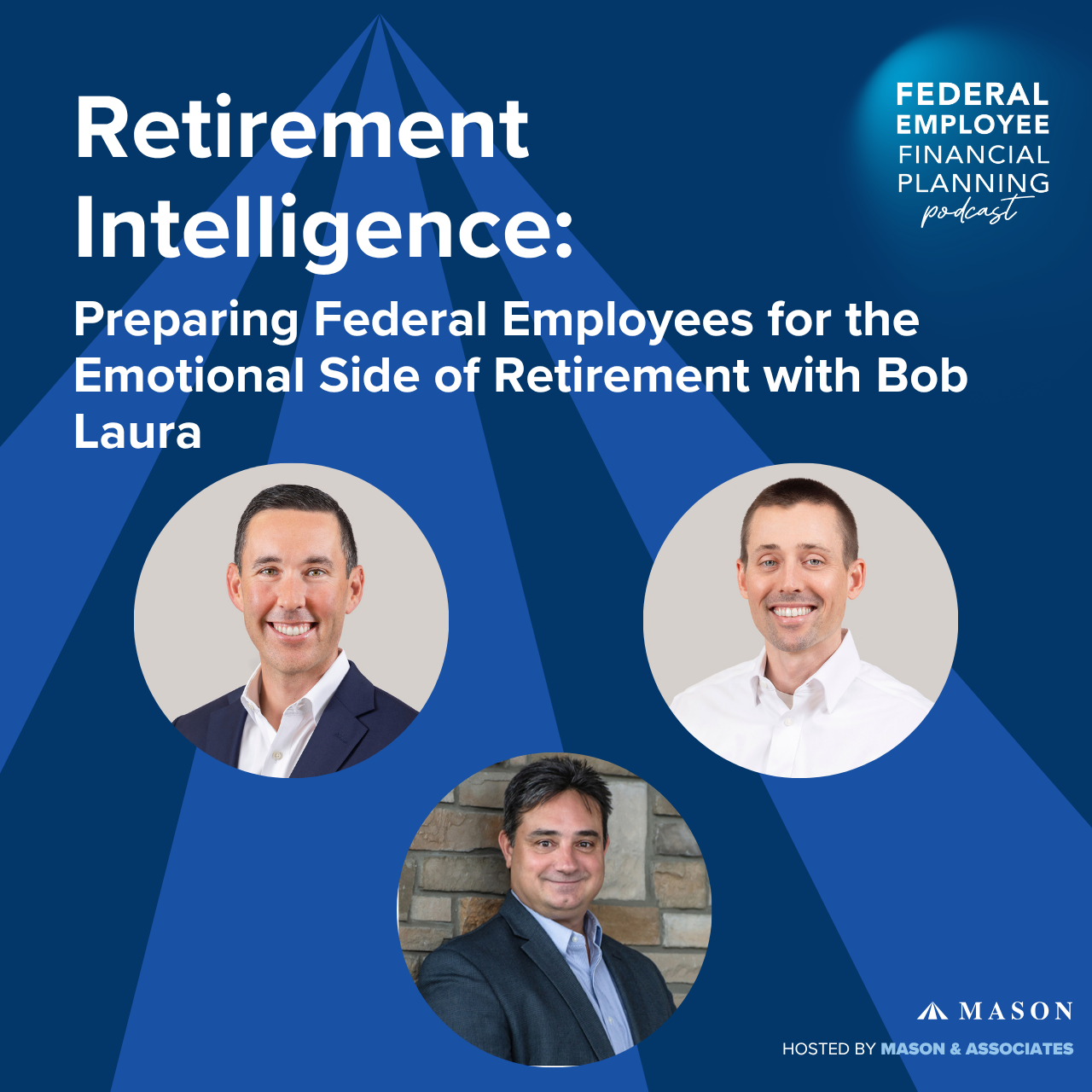
What if being financially ready for retirement is only half of the equation? In this episode, we sit down with Bob Laura, financial planner, speaker, author of Retirement Intelligence, and pioneer in the psychology and social science of retirement and legacy planning. He joins us to share why having enough money doesn’t automatically mean you’re ready to retire, as well as how factors such as identity, relationships, purpose, social connections, and personal beliefs about money can shape the retirement experience.
Listen in as Bob explains how to prepare for the transition beyond the numbers, including how to develop a shared vision with your spouse, replace the social connections and sense of accomplishment provided by work, challenge inherited money beliefs, and create a meaningful retirement before you leave the workforce. You’ll also learn why retirement should be treated as an ongoing process rather than a finish line, how to design your “perfect month” rather than simply your perfect day, and why being intentional, adaptable, and willing to rethink your plans can make all the difference.
Listen to the full episode here:
What you will learn:
- What retirement intelligence is. (4:00)
- Why financial readiness isn’t the whole retirement picture. (5:00)
- How to assess your personal retirement readiness. (9:45)
- How to challenge inherited money beliefs. (15:00)
- Why couples need a shared retirement vision. (21:30)
- How to replace the social connections work provides. (35:00)
- Why you should plan your retirement lifestyle early. (37:00)
- How to build a retirement filled with meaning and connection. (42:00)
- Why retirement can amplify who you already are. (43:10)
Ideas Worth Sharing:
- “Generally speaking, when you ask people what’s most important to them, it has very little to do with money.” – Bob Laura
- “Retirement doesn’t eliminate work, it reorients it.” – Bob Laura
- “The better you know yourself, the better you’re going to retire.” – Bob Laura
Resources from this episode:
- Fill out the Mason & Associates Podcast Listener Survey for a chance to win a copy of Retirement Intelligence
- Retirement Intelligence by Bob Laura
- Bob Laura: LinkedIn
- Mason & Associates: LinkedIn
- John Mason: LinkedIn
- Tommy Blackburn: LinkedIn
Did you enjoy the Federal Employee Financial Planning Podcast? Never miss an episode by subscribing on Apple Podcasts, Amazon, Spotify, and YouTube Music.
Read the Transcript Below:
John Mason: Welcome to the Federal Employee Financial Planning Podcast and the Mason YouTube channel. In this episode, Tommy and I are so thankful to have Bob Laura with us on today’s episode. Bob is a financial planner, speaker, and author, and he’s the author of Retirement Intelligence, which is the reason that Tommy and I brought him on today.
The short bio for Bob is he is a pioneer in the psychology and social science of retirement and legacy planning. He’s a best-selling author and longtime nationally syndicated columnist and is a recognized presenter and trainer at events across the country. Bob, we’re thrilled to have you on the Federal Employee Financial Planning Podcast.
Bob Laura: Yeah. Thanks for having me, guys. I appreciate it, John and Tommy. I’m looking forward to this conversation today.
John Mason: And before we get too far in—oh, sorry, Tommy.
Tommy Blackburn: That’s okay. I just wanted to say hi. Good to have you on here, Bob. I’m looking forward to it. And I think our entire audience will as well.
John Mason: And we do have, Bob, thank you for doing this, we have at least five copies of your book, Retirement Intelligence, which is a nice read.
I think sometimes when you dive into a financial planning book, they can be hundreds or thousands of pages long, they’re overly complicated, and sometimes you miss the point, specifically if you didn’t go to school or have an education in the financial planning background. But this book was…
And hopefully you don’t find it disrespectful, I think it was a little over 100 pages, and I was able to read through this in a day. And as a practicing certified financial planner, I already have takeaways from the book. So audience, don’t let this book scare you away. It’s written for you by Bob, who has years of experience, and we think you’ll really enjoy it.
So it’s a weekend read, and it should change the way you think about retirement going forward. We do have five copies thanks to Bob, so anybody who sends us an email to masonfp@masonllc.net, if you’d like a copy of this book, we ask for a couple things from you. One, send us an email with your contact information.
Two, make sure you’re connected with us on LinkedIn, social media, do all the things for us like we normally do, and we’ll get you a free copy of your book. So thanks again, Bob.
Bob Laura: Yeah, thank you, appreciate just the opportunity of sharing it out there, and it’s why I wrote the book. People, July 4th, right, you’re gone for the weekend, you’re hanging out with family.
You don’t wanna have a three-day book read necessarily, so it’s just meant to really get to the point, hit some people with some quick ahas, and give a better understanding of what we’re really trying to tell people about on the non-financial side.
John Mason: Well, this, so much of financial planning, one, we can go back in time to what was financial planning in the ‘70s or ‘80s, and arguably it was life insurance and mutual fund sales.
And certainly it’s transitioned over the years to retirement planning, Social Security, tax planning, estate planning. But what’s really interesting about Retirement Intelligence is it takes all of that and you basically say, “Yes, your financial planner should be doing all of these things for you, but there’s also another side of financial planning that we need to talk about that maybe the industry’s not doing.”
So if you could, share with us what is Retirement Intelligence, and what was the driving factor that caused you to write this book?
Bob Laura: Yeah. So actually, before I became a financial advisor, I was a social worker, so I enjoyed the psychology of just life. And then when I went independent in 2010, I really wanted to bring together the psychology with the financial side.
So that was really important to me. And to your point, John, like in the ‘70s and ‘80s, I mean, life expectancy was very different. People retired at, let’s say, 65, and maybe they lived to 75. They didn’t have to plan for 30 years. And I think for me it was just the aha moments I had with clients that they had plenty of money, but they just, life wasn’t going well.
They were miserable. They had fractured relationships. They were getting divorced. They were drinking all the time. And I just was caught off guard by it because we’re trained as financial professionals that retirement’s the holy grail. This is what we wait for, and you just save your money, and once you do, once you hit your number, you’re good.
And I found that not to be the case. I found a lot of people lost, and unsure what to do. And so as I’ve really been doing this work, this kinda, this non-financial side since 2010, I wanted to… It kind of culminated into Retirement Intelligence, which is really personal retirement readiness, right?
And so, you guys know this. You help people all the time. You got checklists, and we’re gonna do estate planning, your Social Security we’re gonna take, and portfolio asset allocation. So that’s, relatively, it’s not easy to do. It’s complex, and there’s a lot of things, but most people just check those boxes and not the non-financial side.
So I wanted to develop a way to score personal retirement readiness, and that’s what the book and the actual assessment are designed to do, to let people know, are you really ready for what it’s gonna look and feel like?
John Mason: Well, expanding on that just a little bit is that so many people come to us with a question that says, “Can I retire?”
And the default answer, Tommy, is always, “Well, what’s your current income? What’s your net today, and can we replace that when you no longer have that paycheck?” Luckily for us, we have federal employees, military members, and other people with pensions that I won’t say that’s an easy answer, but the answer is often, “We can replace 100% or more of your current income in retirement.”
That is a frequent reply or answer that we get to give folks who are wondering if they can do it. And then we’re able to take this transition where we’re able to focus on something else, and I think that’s what Bob’s really saying, Tommy, is we have to answer two things: the physical act of being ready to retire from a cash flow standpoint, and then having the emotional, like, is my mind ready? Is my body ready? Do I have a plan?
Tommy Blackburn: Yeah, I think we, we see it all the time, and typically there is a, a lead-up to retirement, so you have to… I think in our experience we would see you kind of have to address almost that hierarchy of needs you mentioned in the book as well, which first you need to answer the question financially: are we there?
What are the goals that we’re planning for? Let’s line all this up. And once we can say, yes, no, put a plan in place. Well, now let’s start talking about what does that look more like inside of retirement. Have you thought through what you’re gonna do to occupy your time, how life is gonna change?
I mean, it’s a huge transition. I think, as your book says, maybe one of the top 10 most stressful transitions in life, so we wanna be prepared, or begin kind of unpacking it. And John, I thought about, just a moment ago, a lot of times we tell folks, “Let’s begin living that retirement budget before we retire,” and it seems like it’s the same thing of maybe let’s begin living the retirement.
Now, you can’t completely live a retirement lifestyle while you’re still working. That’s not gonna ever fly. But begin thinking about, as I think Bob says in his book, what are we gonna retire to? So that way we’re, we’ve already got a little bit of the foundation of retirement life in place.
Bob Laura: Well, I was gonna say, I think, I mean, you guys are forward thinkers. That’s why I just appreciate like, the transition is in place, there’s a lot more to retirement, and people aren’t talking about this stuff, and it’s critical, ’cause, yes, you have to have the dollars and cents put together.
But generally speaking, when you ask people what’s most important to them, it has very little to do with money. Now, that doesn’t, of course, you need money to live and healthcare, all those important things. And to your point, I mean, what a great thing for a lot of the people you guys work with to have pensions ‘cause that’s a huge thing.
It’s a luxury a lot of people don’t have, and it affords a level of safety to allow people to do the other things. But to your point, Tommy, it’s just about financial professionals starting to broach the thing, and it doesn’t mean that both you and John gotta go back to school and become psychologists and get doctorate degrees or go become a therapist.
It really is as simple as offering books like this because they have to come together. So it’s gotta be the dollars and cents with the non-financial coming together. ‘Cause when they do, then you truly have a holistic or a comprehensive plan, not just financial security.
John Mason: We, I reflect a little bit on my career.
I’ve been doing this for 17 years, started in 2010. And as I reflect on some of my best—and best maybe is not defined by most assets, but really good relationships that I’ve had with clients—the longer you have to plan, it becomes less and less of a surprise that they can cash flow retire. So for me, it is a very natural conversation at some point to start asking, “Well, Bob, we’ve been working together seven years. We’ve already said you can retire at 62. That’s three years away. What else? What’s the plan? Where are we traveling? How are we gonna keep ourselves busy? How are we filling the day?”
That’s a natural transition for me at some point. I don’t know exactly when in the relationship I go from cash flow to the softer side of things. But I guess what my reflection is, if the audience is listening and they’re gonna engage with me for financial planning, and they only have a year to retirement, there’s only so much we can do: the cash flow, the taxes, the estate. We may not have enough time to get into the transition of all of the other side, the retirement intelligence piece.
So I guess I’m just calling out, Bob, that the sooner you work with a financial planner, the better, ’cause you have to answer mathematically, “Can I do it?” And then you have to have enough time to answer all the questions in retirement intelligence. So when do you start? ‘Cause you’re a practicing financial planner.
I’m assuming, we’re assuming you lead with cash flow and taxes too, and then transition to retirement intelligence. But how does that work in your practice?
Bob Laura: Sure. I think a couple things. So, I don’t believe in like everyone’s gotta do it the same way. Some people are more open to the non-financial side first.
You guys know retirement planning is complex. There’s a lot of pieces to it. It’s actually, I think there’s some silly statistic that only 54% of people have a financial plan, and it’s because there’s a lot. There’s a lot. After you come back from the first meeting, you gotta do data gathering.
You’re like, “Wow, that’s a lot of stuff.” But the engineers, or there’s certain types who really, you guys know, there’s people who come in, they’re, they already got their spreadsheets. They did all the work. They just want you to check it. Those people, yeah, you wanna lead with cash flow and other things.
But other people, especially if they’re potentially forced into retirement, and you guys probably saw a lot of this just the last couple years with DOGE cuts and all the other things, that all of a sudden you’re out, and you’re like, “Okay, now what? How do I replace all that stuff?” And so I think it’s person by person, depending upon where people are at, how they kinda come in.
And also what we’re seeing, I’m 54, so I’m Gen X. Like more and more people aren’t looking to retire in the traditional sense, let me just retire and hang it up, sit on the porch in my rocking chair. I know nobody does that, but you know, stereotypically. So I think there’s a lot more people who are turning 50, 55, even 60 or 65 and saying, “Man, the gas tank’s not empty, but I don’t want to follow the existing script. I want to do something different.” And so I think that’s an interesting trend. And then, again, me being Gen X, like we were told you weren’t going to get Social Security, the world’s terrible, you know… So like you started saving early. So I’m seeing more people turn, let’s say, 55 and be like, “Okay, I want to do something else.”
And so they’re leaving their primary career for something else. So that’s a long way of saying it depends on where people come in. We use kind of an adaptable philosophy: meet them where they’re at, and then help them get to where they want to go with both the financial side and the non-financial side.
Tommy Blackburn: I love that. I think that very much reflects how we go about it. We, we have a process we follow, but it always starts with what’s most important to them and addressing what’s hot on their minds. So other ways of saying that: meet them where they’re at. Absolutely, because that’s how you get people engaged too, right?
You have to work with the immediate pain point, and then you can begin moving into some of these other areas. So I think we very much agree with you. I’m thinking about the book, which I agree, it was a very digestible read, and I mean that as a compliment, because I feel like we all have a lot of demands in our lives, and having something digestible is just refreshing and doable.
One part in the book, like fast-forwarding, and I think we’re just naturally optimistic as I think about this. Our clients tend to be successful. John and I are optimistic. You seem like an optimistic kind of guy, Bob, so I think we do tend to, one, try to dispel a lot of fears of “Hey, it’s not that bad out there. It’s actually a really good world. Things tend to turn out well. Yes, tragedy happens. Yes, scary things can happen, but chances are it’s gonna go well, so let’s focus on some good.”
But in your book, you talked about like scripts, labels, and scarcity mindset, and I thought that was all… I just thought it was great to read, and I think that John and I, again, when people are ready to be met there, and I say John and I, our firm, we try to get into that.
And John and I and the other advisors have at least internally talked about trying to get people to… they’re accumulating too much money in retirement. It’s like, “What are we doing, guys? You say you don’t want to leave a legacy, you’re gonna leave a legacy.” So let’s start dreaming more and getting away from, it’s just those scripts that are ingrained in us. I’d love to hear your thoughts.
Bob Laura: Well, you make a very good point, Tommy, though, ‘cause I think, too, also what’s interesting is just couples, right? And so very stereotypical, traditional, let me just say husband, wife, boomer. Again, usually the husband’s the numbers guy, and he comes in, he wants to run the numbers.
But the wife’s like, “Holy smokes, he’s gonna be home all day. This is not gonna be good.” So I think there’s also finding that balance, right? And then to your point, I love the psychology of money. So again, a lot of times I think people are following rules that don’t serve them well.
Again, I was a blue-collar kid. I grew up in Detroit, and so my parents would always say, “Money doesn’t grow on trees.” And you’re like, “Well, sweet. Well, where’s it—like, how do I get it?” That doesn’t help me. They didn’t explain stuff. And so I think, that’s just why I just…
It’s not like we have to reassess why Tommy or John, why you guys didn’t get allowance that one time when you were 13. We’re not going back to assess your life story or trauma related to it. But what beliefs do you have about money? What biases do you have? Because whether you’re single, divorced, widowed, or a couple, sometimes that stuff doesn’t serve you well in retirement.
And to your point, Tommy, like you could have hoards of money, and we could do the world’s greatest estate plan, but no one’s, you’re not gonna be able to see someone get it. And so that’s where I think that crossover’s really important on, yes, we got the dollars and cents right, but let’s do stuff now while you’re able to see it and have the impact that you want.
John Mason: We recorded a YouTube video, something about flexing your money muscles, and the premise behind it, Bob, was that you save and save and save, and you prepare and you prepare and you prepare, but then somewhere along the way, your ability to enjoy your money atrophied and you forgot how to do it. And now you’ve woken up in retirement.
You’re 65 years old. You haven’t flexed that muscle in a long time, and now all of the psychology of money is hitting. You retire, and the market’s down, and you don’t have any reserve. You weren’t taking your creatine. You weren’t going to the gym. Nothing good was happening, and all of a sudden you just don’t wanna spend your money, and then the market goes up and to the right.
You keep accumulating, and you just can’t get past some of these, these biases. And it’s generational. I mean, we still see Depression-era parents who impacted their children, and then those children who were raised by Depression-era parents who have impacted their children. So we say sometimes in the industry is you don’t wanna battle ghosts, but at the end of the day, like some of the conversations we’re having with clients today is because of two generations before, what they experienced 50, 60, 70 or almost 100 years ago.
It’s pretty mind-boggling to think about the generational impact, and I think you said, and this maybe isn’t the perfect segue, but rules of thumb become rules of dumb. Or inherited wisdom from previous generations may not be the wisdom that’s gonna carry you into retirement.
Bob Laura: Well, and I think the three questions I like to ask people are, especially when it comes to money, whose rules are you following?
Why are you following them? What would happen if you changed them or broke the rules? ‘Cause a lot of times I think people are like, “Oh, my, my grandma would roll over in her grave,” and maybe she wouldn’t if she understood what was going on or how things are different. Or if you’ve got 2 million bucks and you’re living on $150,000 a year, and your pension’s 100, there’s a lot there.
And again, I think that to your point too, Tommy, about the scarcity mindset, like I’m always shocked at, you can run people’s numbers all day long. You can have five different software programs that say, “You’re gonna be okay,” they still don’t believe you, and they wanna come in every year, “Are you sure? Are you sure? What about the…” and so I think it’s putting all these little pieces together to really help people start to see that it’s not as bad as it is. Spend it or find a way to draw it down ‘cause, and you guys have seen this too, I’m sure. I’ve had a couple clients who unfortunately passed away, and my phone’s ringing off the hook because the kids need the money because they already bought a boat, a car, an RV, and they’re just, you’re just like, “Maybe you should grieve or wait three months or something.”
But somebody will spend their money, and so I think it’s just really important to think, to be diligent about it, and again, to go through these questions about whose rules are you following, why are you following them? And then don’t just assume that the rules work. ‘Cause again, rules of thumb are really good: save 10% of your income, have your at, in one, more than one basket. Those are all top of mind good things, but at some point they can start to hurt you if you don’t personalize your plan.
John Mason: So I remember we did a client event, Tommy, where I was on a boat. We had a sunset sail.
And one of our clients we had the conversation with, and it was like, “Somebody’s gonna spend your money. It’s you or them. You pick.” I mean, it was almost verbatim, Bob, what you just said. So I think that’s a good one, audience, for you to remember. Somebody’s gonna spend your money. It’s either you or them.
You pick. I wanna go to Tommy’s point, but I also have a question because we touched on spouses a little bit, and what I’d love to hear from you, Bob, is a lot of our clients are spouses, so husband and wife or a married couple, so I wanna talk about that transition. And admittedly, I don’t know that Tommy and I have had a ton of coaching on this, but in my experience, which I think is good after 17 years, a staggered retirement seems to work well, meaning, if Tommy and I were married, I retire in ‘26, I get to figure it out.
Tommy retires in ‘27, he figures it out, and then somewhere between ‘26, ‘27, ‘28, hopefully we’re marching to the same sheet of music together. I’d just be curious if you have a couple tips for spouses to—and I’ll have a funny story too real quick and then turn it over to you. The same, this one couple that we were working with, when she retired, she started labeling her eggs.
She would take them out of the container and start labeling them, and everything in the house was more organized than—’cause I guess for 40 years, her house was unorganized, so now she was retired and she was gonna become organized. Then they come in for a review, husband gets up to go to the bathroom, and she looks at me eyeball to eyeball and says, “John, you gotta tell him to stop following me around. I can’t take it anymore.” So, Bob, this is… couples have to figure it out. I mean, especially, you think about military or some of our federal employees who deploy or travel or are gone multiple months a year, how do you plan for a retirement where you’re together all the time?
Bob Laura: I think we’re gonna have to do 12 episodes, and that would get us like the halfway point or something.
Your point’s well taken, John. I think for couples, so we call it an either in-sync or out-of-sync retirement, so in-sync at the same time, out-of-sync at different times. One of the challenges, of course, is age. So, I believe the typical age gap in a, again, a stereotypical husband and wife is gonna be two to four years, more likely four years.
Again, to the benefit of many of your listeners and your clients, they’re gonna have healthcare, other benefits or pensions and some of those other things included, so it’s less of a burden. But that’s always a big question. My wife and I are four years different. She’s four years younger, and she lets me know that all the time.
But basically, what’s gonna happen when I’m 62 and she’s 58, or 65 and 61? And so I think there’s a lot of questions there. And then I also… People don’t really realize that there needs to be a shared vision for retirement, and I think one of the most important things I see for couples, there’s gotta be time scheduled together and apart.
Time does not equal love, and this is especially for the guys. I don’t mean to pick on you, but I’m a guy, too. But just because your wife doesn’t wanna be with you 24/7 doesn’t mean she doesn’t love you. She needs the space, and you need to get out of the house. I actually had a client I was working with recently, and he retired, and she was still working.
And he would wake up, have some coffee, and be chatting her head off by like 9:00. So she set a rule. She’s like, “You can’t talk to me until 11:00.” And then I had another client who they’re just like, they’re, she retired first, and then he retired afterwards, and then after six months, she’s like, “By Tuesday at 10:00, you gotta be out of the house,” and then same with on Thursday, at least two days a week.
And so I think there’s a lot of figuring this stuff out. And we actually do retreats for couples. So it’s three, it’s a Friday, Saturday, Sunday, and we cover these things because I think one of the best things that couples can do is talk to other couples, because I think that there can be a lot of just things going on.
And so we actually have a framework that we use called common enemies and then shared conversations to help people work together. And I know I’m going on here a little bit, but I think real quick too, the other big thing is, again, I’m 54, my wife is 50. Let’s say I wanna retire in 10 years.
Well, we’re currently talking about what would we want that to look like? But in all honesty, we have no idea what it’s gonna look like. Real, real quick, one more story. I had a client who they had been planning that once he retired, they were gonna sail around the world together. Set in stone, perfect plan, 10 years away.
Boom, he gets there. They buy the boat. They’re getting ready to go. They had their first grandchild. Guess who didn’t go? And so that was a really big challenge because they had focused so long on potentially being able to do this trip around the world, but she did not wanna miss time with that grandchild.
So make sure when you’re planning as a couple, there’s some flexibility in there because a lot can change. Great news on a grandchild, but it could also be a health issue or something else.
Tommy Blackburn: Yeah. I just think to myself, the best laid plans, right? And that’s why we have flexibility, and also just humility that we have no idea what the future’s gonna bring, and we have a flexible mindset.
I’ve also thought, was thinking about the retired couple, and one client, I’ll never forget the phrase, she said, “He’s underfoot.” Just, “Every time I take a step, he’s right there and he needs to go somewhere.” So I don’t know why it is. Apparently the men, they’re always underfoot, but that does seem to be—
Bob Laura: Real quick, I had a speaking engagement where I said that they need time apart.
A woman stood up and applauded and just said, “Amen,” ‘cause she was just like, “Did you hear that?” Because, and I think that, in all honesty, guys struggle more with retirement than women do, and it’s primarily because women have more roles. They’re caregivers. They’re doing things. They’re taking care of people, and so they can fit in.
And we put so much into our identity in the workplace, that it can become problematic. And I interviewed Deion Sanders for one of my articles at Forbes, and basically what he said is, “You can’t fall in love with the game because the game can’t love you back.” And it’s the same with your work.
And if you’re good at work, you’re probably gonna stink at retirement. And so it’s just waking up to those realities and just “Hey, I love my job. I was good at…” whether it’s military, a scientist, whatever. If you’re good at your work, you’re probably gonna be bad at retirement at first.
John Mason: Well, there was a LinkedIn post the other day, Tommy, I’m gonna, I’m gonna botch it a little bit, but essentially it said, Bob, it was like, you know—if you leave your job, your work’s gonna replace you. This is gonna happen, and all of this is gonna happen within six months. So basically, use your leave, use your vacation, figure out who you are, find your own identity because you seem like you’re this very critical part of the team, but ultimately, we’re all replaceable.
I mean, Tommy and I are partners and owners, majority owners at Mason, and ultimately, one day we’re replaceable. So our identity can’t just be we’re financial planners and podcast hosts. There has to be something more. And I believe you that men struggle more with the retirement transition, and I love the “time does not equal love.”
And I also, reflecting on myself, I can go a certain speed, where maybe my spouse, Sarah, would like to go a different speed. So, maybe I could go full-time in my RV immediately in retirement, and maybe Sarah would only wanna do 12 weeks. Well, we have to somehow align with the fact that we have different speeds, we have different goals.
Maybe she needs to speed up, maybe I need to slow down and meet in the middle. But I don’t think that… Their differences attract, right? Or opposites attract. And I think when you’re working, your time is so limited that it maybe is easier to connect and agree on things. When you’re both retired and you have unlimited time, you may see those differences start to clash a little bit more if you’re not careful.
Bob Laura: Well, this is why we do the couples retreats and why couples just have to start talking about it. You don’t have to agree on everything, right? So I mean, people are like, “Are you as a couple on the same page?” No, they’re not even in the same book, because they haven’t talked about it.
And so my wife says this, and so I’m stealing it from her. You have to move from expectation to invitation. And so I think that’s what happens, is in our relationships, we have expectations. And so I think I know what my wife wants, and I think I know what my wife wants to do because of our track record, but I often find out that I have no fricking clue what, I’m way off base on that.
And so I think it’s just being honest about that. And people also change. And so as couples approach retirement, it’s not about starting off 100% on what retirement life’s gonna look like on the same page. It’s okay, but it’s a process that you need to go through, that you’re talking through, what does it look like?
What, to your point, John, what is your speed? What are we gonna do? Because, this happens all the time. I’m in Michigan, so everyone snowbirds down to Florida. Well, I got one spouse who wants to leave in October and not come back till April, and one that wants to leave in December and come back in February.
Neither one’s right, but you know, what’s the plan? Like, how are you gonna get back these different times? And I think, too, not letting resentments build up, because that’s what you don’t want in retirement. Even if Tommy or John, or I could predict the next stock market crash, the best way to lose 60% of your portfolio is to get a divorce.
Tommy Blackburn: Yeah, I was thinking that.
Bob Laura: It’s just not going 50/50. You, the attorneys get 20, and so you end up with 40/40. And then too, a lot of that stuff can be, you know, addressed now because people don’t want leftovers. And just because, and again, I’m saying this to men very stereotypically, but more and more women are breadwinners, so what’s happening in this place too is that just because you have time in retirement and that you’re gonna fix everything, you’re gonna get healthy, rekindle your marriage, spend time with your kids, well, just because you have time doesn’t mean they have time.
And so it’s really, really important to start to put these pieces together and work on that stuff now. I’ll say this real quick, and this is in the book too, that work… I mean, retirement doesn’t eliminate work, it reorients it. And so you’re not carefree, do whatever, “I’m just Captain Chill.” You’re not. You basically have to work on yourself, and if you want to live a perfect or an ideal or a successful transition to retirement, don’t wait till you get there.
Start before so you’re taking it with you, not waiting for it to magically appear.
John Mason: Two quick thoughts, and then I wanna hear where you wanna go, Tommy. What I hear in my mind, Bob, is that—and I think you talk about this in the book—you’re very fortunate if you’re a federal employee, for example, and you work in an organization where there’s 1,000 people, and you have lunch with these folks, and everybody has a common enemy, and common gripes, and common wins and successes, you have your tribe of people, you have your group that you get to connect with every day.
And I think we take that—you mention it in the book—we take it for granted, this connection that we have to the workplace, to our friend, even if they’re friends of convenience, they’re still friends in the moment. But then you really have to work hard in retirement to replace that. And maybe Sally at the office isn’t your favorite person, but she’s still, you still got to see her a couple days a week.
You don’t replace Sally in retirement. Now you’re just sitting at home watching Fox News, which is a recipe for disaster. And then I think the other thing… And that’s not a political statement, audience. You could replace that with CNN or whatever. But just because you have time doesn’t mean they don’t have time, or they have the time, or want the time, or share your interest.
I mean, I’ve seen clients who move to where their kids are and get disappointed by the end result. “I don’t see them as much as I thought I would. They’re not coming to see me. I need to buy this big house so I’ll have a pool. All the grandkids’ll come.” And then the grandkids never come, and the kids never come visit because, let’s face it, at 38 years old, 39 years old with a couple kids, throwing them in a car, going for two hours, that’s a big ask.
So I do think the audience should be aware that’s a very impactful statement. Just because you have the time, just because you think your kids or the grandkids are just gonna show up and you’ll see them every week, that may not actually happen, so.
Bob Laura: And to your point, John, just the convers—and two, just talking to the kids, “Hey, we’re thinking about retiring and coming down.” What does that life really look like for you? And this is where I think people, they just kind of make it up in their head, magically. “This is just gonna be awesome.” You’re talking, I think you were talking about being this optimistic, and you’re like, “Yeah, but that’s not realistic.”
Aand I tell people this all the time, just write it down. What would a week, a month, a year look like? How much time would you be spending with these people? What… And what happens if they move or if there’s a hou—like, there’s so many what-ifs, and you can’t have it all figured out, but you’ve gotta just start having these conversations with your family, with your spouse, with your kids, what this looks and feels like.
This is the science side. You can make better decisions when you have more information. So don’t just go get your financial stuff checked. Check in with your kids, check in with your spouse, check in with other people is really, really important.
Tommy Blackburn: Yeah, I mean, and it seems, when you say it, it seems like common sense, right?
You should have conversations with people. You shouldn’t make assumptions. You should involve them in the conversation. But we do all kind of just make assumptions, and you don’t wanna show up and just rely on assumptions. I agree. If you have good information, you can make—
Bob Laura: Yeah, they, especially guys, like, they… And again, I know I’m picking on guys, but—
Tommy Blackburn: It’s easy—
Bob Laura: It’s all up here ’cause when I do an event or something, a lot of guys are sitting here like this, “I don’t need this.” And I’m just like, “Buddy, put it on paper, man. Show me.” Yeah, like I grew up in Detroit. I’m an old school show-me, don’t-tell-me, right?
Show me what it looks like, and then from there, we can, if we know or we can see it. It’s just, it’s so important just to write stuff down and noodle it out and share it, because then you can get feedback and kind of work towards this. And again, why be surprised or mad or let these resentments build up? Put it out there and start to work on it.
Tommy Blackburn: Be intentional. I guess my biggest takeaway there is be intentional and be flexible. So not, you know, hope is just a dream. We gotta have a plan. We have to be intentional, but we also can’t be so anchored to that plan that we don’t allow change. We have to certainly know things are not gonna go exactly as planned. So I think this is all fantastic. I’m curious—
Bob Laura: I wanna just add real quick too about John, the shared… The big thing for coworkers and replacements, the shared frustrations. And so when you lose proximity and shared frustrations, like John and Tommy afterwards today, you guys are gonna be like, “Man, that Bob joker, he just was talking too much. What are we gonna do about it?” But in the future, if John retires first and Tommy’s like, “Man, Bob’s coming back,” he’s gonna be like, “I don’t care. I’m retired.” So it’s not that same level of connection. Then, of course, without that proximity, the, you’re… The forced interaction, you see each other, and so people have to work hard on their work relationships.
And again, this is something we do in the assessment in the book. You have to really look at where are your social connections. Where do you get them? If you get 50% or more in the workplace, you’ve got some work to do on the outside.
John Mason: I want to make the point, ‘cause you said write it down a couple times, and one of the things that’s really stuck with me over the last couple weeks since you and I first met was anybody who’s anybody can design their perfect day: get up, have sex, go golf, have pancakes, end with a glass of wine. Yeah, you can design your perfect day, and that’s pretty easy. But give me your perfect month. Now all of a sudden, I don’t know if you can do all those. Maybe some of those things you can do every day, but maybe not all of them. So designing your perfect month…
Bob Laura: The Bill Murray Groundhog Day, right? Just all of a sudden by Wednesday you’re like, “Wait a minute, man. I’m doing the same thing.” And then I don’t know if you guys are golfers or other things, but you can’t golf every day. After two weeks you’d be, your shoulders’d be blown out, your knees.
And so I think, you know, what does a perfect day and a perfect week look like? What does a month look like? And sometimes too, what does six months look like? I just was working with a couple. She was a retiring CEO. He was staying with his business, and they kept on telling me these, “Oh, well, we bought a place in Florida, and we’re gonna do this, and we’re gonna do that.”
And I just said, “You can’t. It’s not, I don’t, You can’t. He says he’s staying here and working. You’re saying you’re there. You’re gonna do these five things. I’m just looking at a calendar. I don’t see it. Can you guys put it on a calendar for me?” And they couldn’t. And I think that’s what happens, is they put up here, “Oh, we’re gonna spend time together. We’re gonna acclimate to our new community in Florida. We’re gonna come back every two weeks.”
And I’m like, “Okay, have you booked your tickets? Are you driving? How often do you wanna do it?” And so I think it is… And it doesn’t have to be perfect, but if you start to lay out what does the first month or six months look like, you can really start to envision where you’re gonna have problems and where you’re gonna need to fill space.
And again, this is also where we talked about this when we first met, John, too. Retirement is empty, meaning there’s nothing there, and if you don’t fill it up with stuff that is important to you, other stuff will sneak in. That’s where alcoholism, depression, isolation, terrible things. There’s a dark side to retirement that no one talks about.
So if you don’t have things to fill your day and your time, other things will sneak in and potentially take it over and overrun it.
John Mason: I appreciate you bringing that up. We’re gonna have another guest on that’s gonna talk a little bit about that in the future, too. And my big takeaway here is, and maybe I’m not qualified to have these points or thoughts in my head, but social media, we’re on it, is not great.
This is arguably social media, but social media can be really bad for your mental health. You see people on vacation. You see people traveling. You see AI-generated six-packs. So now all of a sudden you’re shooting up testosterone to try and look like… There’s a lot of things that can go on, and there’s a lot of reasons to feel bad about yourself if you look hard enough.
I think where I’m trying to get to is you can go into retirement with all these assumptions, audience, that you’re gonna love to travel, you’re gonna cruise, you’re gonna do this. You’ve seen what other people do. But you get into retirement, it just doesn’t feel like that. And then you start questioning yourself, and then the depression, the anxiety, all of these things continue to unravel and get harder and harder.
But in reality, so many people struggle with this transition. So if that is you, you’re not alone. Retirement is not just this easy thing that everybody just solves day one. Tommy and I have been doing this for each 17 years, Mike and Ken, Bob for decades. And it’s a continued puzzle that you have to solve, not just once, but really every day of your life after you stop going to work.
You’re having to solve for—maybe, I don’t know if PERMA is the right acronym to bring in here, but you’re solving for your connections, your positive enjoyment. You’re solving for your passions, all of these things. And whereas before you just had to get up and go to work, it was kind of solved for you, now that retirement is empty bucket. It’s just so powerful.
Bob Laura: Well, I think what’s really important, ’cause everyone has heard that there’s 10,000 baby boomers turning retirement age every day. Some people say 10,000 people retiring every day. The real reality of it is I think about, at least 60% of people who go to retirement fail.
That’s empirical evidence. We’ve done some research on that. But basically, you can’t tell anyone retirement’s not going well because, really, technically, especially a federal employee, you got a pension now. You have all the time. You replaced your income. You got healthcare. What could be wrong with that?
But especially Type A driven people, you’re not gonna become Captain Chill just because you’re retired. And so I think it can really unravel fast for people, and people suffer in silence for the first couple years because who are you gonna tell? “Hey, Tommy, how’s retirement going?” “Oh, it’s terrible. It’s the worst decision I ever made.”
Nobody ever says that. What do they say? “Best thing ever. Don’t know how I did anything before. I’m super busy,” but it’s not super meaningful. And so that’s why this work is really, really important, to your point, John. You gotta keep working at it. It’s not just this, “Hey, I, thanks to this new book, Retirement Intelligence, I got everything figured out in one weekend.” It’s this process, and I think being open to that process, not going to that dark side.
And then to your point, we can use psychology. So positive psychology is really big these days, and basically what this group came out and said is, in order for you to thrive at any stage of life, you want these five elements, called PERMA—P-E-R-M-A: positive emotion, engagement, relationships, meaning, and accomplishments.
When you have those five things, you’re thriving or flourishing. Well, again, one of the worksheets we do at our couples retreat or even in our book or workshops, fill out PERMA. Where do you get positive emotion, engagement, relationships, meaning, and accomplishment at work? So if you had to answer that right now, easy breezy, right?
I get enjoyment from being on the podca—or engagement from being on the podcast, relationships with my coworkers, accomplishments for helping people solve their stuff. Okay, now when you don’t have that work, how are you gonna replace it? And that’s where people really kind of fall off the cliff of, like, “Wow, I didn’t realize how big of a work, an ecosystem my work is and how much there is to replace.”
John Mason: I love Captain Chill. That’s a good one. Right. And I love in the book you said, “Retirement doesn’t change who you are, it amplifies who you are.” So audience, that’s a good nugget. You can think about Captain Chill. Retirement doesn’t change who you are, it amplifies who you are. And, in the book, Bob, you mentioned a good example.
Bob Laura: I always say it’s you times two.
So many people think, “When I retire, you know what I’m gonna do? I’m gonna work out every day, eat healthy, I’m gonna hang out with the grandkids.” And I’m like, “No, you’re not,” ‘cause you don’t do it now. And we know this, Stephen Covey, The 7 Habits of Highly Effective People.
We do what we know. Same with behavioral economics. Defaults. We do what we know. And so you’re not this new you. If you’re, like, the CEO and in charge of every committee, you’re not just gonna be like, “I’m sitting on the beach reading books all day.” You might for two weeks, but… And this is what I really think is important about the, the RETQ, the Retirement Intelligence Assessment, because it’s designed to look at you.
So who are you? What’s important to your preferences and your beliefs? Because that’s really what you’re gonna do. So we basically score your preferences, your values and beliefs against factors that we know cause people to fail in retirement, because again, you’re not going to change. It’s you times two, and if you’re not ready for that, you’re gonna suffer in silence and learn things the hard way for the first couple years.
John Mason: So we have your book here. If I recall, there’s a link in your book. Maybe there’s a discount code to take that exam?
Bob Laura: Yep.
John Mason: Or if you have the book, you can take the test. How does that work again?
Bob Laura: Yeah, so the book has a 50% off code, so, and the website is retq.org. So just R-E-T, then the letter Q dot org.
It’s normally $199 to do it, so it drops it down to $99. But it kicks out a 16-page report, and we have a coach that goes over it with you. That, and again, it scores your personal retirement readiness. And again, it’s looking at things like, okay, what do you actually know about the retirement transition?
Your IQ. Then we look at your EQ, right? Your emotional quotient. And then we look at your AQ, which is really about your ability to adapt. And then your SQ, which is your spiritual, which again, spiritual being values and beliefs. There’s nothing religious or faith-based in there. And so that’s kind of like our little idea of the IQ, EQ, AQ, SQ is the, kinda the rhythm that would get people to this RETQ.
So the more you have of all those four things, the more intelligent you’re gonna be about retirement.
John Mason: So we’ll put a link in the description to the assessment. We’ll obviously link to your book. Reminder for those of you who are listening, thanks for being there. If you’d like a copy of the book, send us an email, masonfp@masonllc.net, with your contact information.
Make sure to do all the things for us, like, subscribe. Hit that bell notification. Put you on the spot, Bob. I don’t know how… I haven’t taken the test. I don’t know what my IQ or EQ or any of those things are at the moment. So audience, I can’t tell you that you’re gonna love the assessment, but I’m wondering, Bob, is there a discount code that our listeners could use to take this assessment if they wanted to?
Bob Laura: It’s in the book. I don’t have my book in front of me, but I’ll make sure I get it to you. It’s in the book.
John Mason: Okay.
Bob Laura: And we can put that on the link, too, so that they can have it. So yeah, definitely. So we’ll put that in there so they’ve got that. They can email me, too, so if you go there and just hit the Contact Us, if you’re just like, “Hey, I listened to the Federal Employee Financial Planning podcast, and I wanted to take the RQ,” we can send you that link, too.
So if that’s easier, whatever is best to just get them that discount. But I think the whole thing is it’s really, for me, working with people like you, finding forward-thinking people who are onto the next thing, who aren’t just tied up. ‘Cause I think this is what’s gonna be changing going forward.
Does your advisor talk about more than money? And that’s why I think you guys are successful, ‘cause you get it, and you’d not—you get it more than just one way, then. You’re just not talking about, you’re doing it, and I think that’s really important that people have someone that they can talk to personally and kind of share what’s going on, but then they can also put the numbers to it.
So I think it’s that combined things. And again, I don’t think financial advisors have to go back and be therapists or PhDs. It’s just offering the tools and resources like you guys are doing.
John Mason: Well, Tommy, I think this may be a good point for you to just elaborate on when we get a client email, how do we respond?
As we think about the ability to share stories and education and experience. Clients can Google things and get the Google answer, or they can get the ChatGPT answer, but we’re pretty different when we’re able to respond to client questions or concerns.
Tommy Blackburn: Man, it comes back to having a personal relationship.
I think that there’s a lot of themes in what we’ve talked about today. A big one, intentionality is big, but a process and an ongoing process I think is a big theme of this too. You don’t just show up to retirement and I’ve checked all the boxes and nothing changes. You have to adapt. You have to look at some uncomfortable questions sometimes, and you’re not gonna have the answer immediately, but you’re gonna work at those answers, and you’re gonna evolve those answers.
So when we get a client question, sure, what’s the technical answer? How does it relate to your plan? But, what’s really going on? Why did you ask this question? What’s changing in life? Let’s have a deeper conversation. And that’s the fun, fun part, I would say, of financial planning, of what real financial planning is—that personal relationship.
And we learn and grow from our clients just as much as we’re able to help them, and the same with Bob. You’re helping John and I. You’re opening our minds and helping us think about things. I thought, John—at the very back of the book, I really liked this one paragraph because, I don’t know, I guess maybe I just lean positive.
Things can be scary, but I also want people… I firmly believe a retirement can be one of the most powerful phases of your life if you’re intentional about it, that really great things can come from it. If you have good health, you do things that are empowering to you. “Consider treating retirement like a camera. Focus on what’s important. Be sure to capture the good times. Develop from the negatives. And if things don’t turn out the way you expected, take another shot.” And I think that just sums it up so well.
John Mason: I love it. I love it. Well, we’re about 50 minutes in. I think we’re gonna start working on kind of closing it down with final thoughts, maybe any questions, comments, et cetera, maybe some action items.
So I have a few, I think, more one-liners that Bob listed in the book that I want to put out here, and then Bob, closing comments for you, and Tommy too, is I love the question of: what was COVID like for you? And I don’t know, that wasn’t in your book, I don’t think, but that was something you and I talked about last time.
And you think about COVID, being ripped away from your office, losing those personal connections, all of the things that was going on. I mean, you lost your personal connections, the market was down, it was scary. So some of the top 10 stressors in life were happening. What was COVID like for you?
Because that may be what retirement is like for you. I loved the “How are you gonna introduce yourself in retirement?” What’s your elevator pitch when you are a retired person? Is it just going to be, “I’m a retired federal employee,” or, “I’m a retired GS 14,” or is it going to be, “I am a full-time grandma or grandpa. I volunteer here. I do this. I give back here, and then I enjoy golfing with my buddies on Sundays”? What’s your elevator pitch? Because if it’s just, “I’m a retired person,” I think that goes back to that kind of empty bucket, and it’s not really a meaningful statement.
It doesn’t help anybody know who you are, and it doesn’t really describe who you are. And then I liked how you said volunteering is not just gonna happen magically, so you have to get involved, you have to plan for it. And then finally, which I just think is so relevant for our clients and people listening, is staying up to date with technology, because, one, you’re getting that mental engagement; two, it’s allowing you to connect with friends, family, and other folks. So staying up to date with tech I feel is very important. It enables you to connect with your financial planners better, your CPAs, your estate planning attorneys. And we find that clients who don’t keep up with tech start to get very frustrated 5, 10, 15 years in retirement because the world’s moving in a direction, and they don’t want it to go there.
They don’t want to work with that CPA because they have an upload portal. They don’t want to work with this person because they have to do a DocuSign. But, like, that’s just the world we live in now. So you have to stay up to date with the technology and the times to make sure you’re not just having a negative worldly experience.
So those were some more kind of one-liners. And I guess also I loved the “happy, healthy, connected.” Retirement, having money is great, but if you don’t have these other items, specifically the personal connections and your health, then it becomes a little meaningless. So I’ll get off my soapbox, turn it over to y’all for any closing comments.
Bob Laura: No, I mean, I would just steal your guys’ comments. I think, Tommy, you’re spot-on about being intentional, start having these conversations. And then I think just those points you just highlighted, John, really highlight how much work there is to do. And I don’t mean that in a bad way, but there’s a lot of things to think about.
And again, I think if you’re just intentional and proactive about it and thinking about, “How am I gonna replace some of the things that are important to me in the workplace? How am I gonna—where could I potentially volunteer, and can I try some of those things now? What other little steps can I take to really identify who I am and what’s important to me?”
And I think the big thing is that my work with Retirement Intelligence, I think, is to disrupt patterns and get people off autopilot. A—and that’s really what it’s about, is we just need people to stop and reflect, right? And the better you know yourself, the better you’re going to retire. The problem is most people don’t know themselves anymore because they’ve been just run so hard and consistent, and it’s just there’s never this pause and this, this time-out.
You think that’s gonna happen when you get to retirement, and it can, but it’s sort of too late. And so I think if you really start to say, “Let me just get off autopilot for a weekend at a couples retreat,” for a client event with—you’re going out on a sunset cruise. Just get off autopilot and then get to a place or a point, whether it’s with this book, meeting with you guys or someone else, that—ask yourself some of these questions and just starting to really reflect on what’s important to you, why it’s important to you, and how you can put that plan in place.
Tommy Blackburn: Guys, I don’t really have much to add. I think we’ve done a great job covering it. The one thing that was coming to my mind, John, as you were talking about technology, I have one elaboration there. I think the reason that becomes negative if you don’t stick with it—which not have—it’s not like you have to be a tech guru, but just embrace change, essentially—is because you become isolated if you don’t.
And as you become isolated, it’s not good for us. We’re meant to be social, interactive, have communities. And that won’t happen to you if you’re a client of ours. I’m guessing probably the same for Bob and his clients, because we use a lot of technology with our clients, so we kind of help bridge the, here’s how things are moving and keeping you involved, and it’s pretty awesome.
One anecdote I think about, I remember, John, I had a client, early 60s, said he didn’t wanna do Zoom, and I said, “I’ve got a client in their 80s who’s been Zooming with their grandchildren, and they’re a pro at it. You can definitely do it, too.” And it seemed like that was enough. I don’t know if that was appropriate for me to say it, but it disarmed him, and they’re great with embracing technology kinda after a little bit of that conversation.
John Mason: Well, embracing technology allows me to have a client meeting discussing Medicare with somebody who just finished scuba diving in the Red Sea, you know—
Tommy Blackburn: Oh, awesome. Yeah.
John Mason: In a different time zone. He’s literally in his wetsuit. He’s like, hair’s all wet. He’s like, “Hey, man, what am I doing with Medicare? Just finished scuba diving.” I’m like, “Dude, that’s awesome.” Mountains in the background. I mean—
Tommy Blackburn: Do you really want to talk about Medicare right now? That’s the real question I have.
John Mason: It was a little surprising that we talked about Medicare, but in what other world do you get that connection with your client to see them doing these things and to be able to talk business, guide them in the right direction?
Really cool experience. Bob, thank you so much. I really think our audience gains so much from this podcast, and we’ll be sure to promote the book. We’ll—again, the five free copies are out there for anybody who’s interested. Link in the description below to order the book on Amazon as well as take the assessment.
And Bob, thanks so much for being with us.
Bob Laura: Thank you, guys, for having me. I appreciate it. You guys are great.
Tommy Blackburn: Thanks, Bob.
John Mason: Audience, thank you for being with us on another episode of the Federal Employee Financial Planning Podcast. Remember, we’re financial planners first, and we do this content creation second.
We hope you leave this episode and every episode feeling educated and empowered to make positive changes in your financial plan. More than ever, after this episode, you know that financial planning is so much more than just money and cash flow. It’s how are you going to fill that retirement bucket when you no longer have that workplace?
Thank you for hanging out with us on another episode of the Federal Employee Financial Planning Podcast.
The topics discussed on this podcast represent our best understanding of federal benefits and are for informational and educational purposes only, and should not be construed as investment, financial planning, or other professional advice.
We encourage you to consult with the office of personnel management and one or more professional advisors before taking any action based on the information presented.